Introduction
Artificial intelligence is rapidly transforming the landscape of occupational health (OH), offering powerful tools for risk assessment, health monitoring, clinical decision-making, and workforce management. However, as AI becomes more deeply embedded in occupational health practice, leading industry experts are now issuing a clear call to action: professionals must implement robust fail-safe checks before relying on AI-driven outputs to make health and safety decisions.
Without adequate human oversight and verification protocols, AI tools — no matter how sophisticated — can introduce dangerous inaccuracies into the workplace health environment, putting workers and organizations at serious risk.
The Growing Role of AI in Occupational Health
The adoption of AI across occupational health settings has accelerated significantly in recent years. From predictive analytics platforms that forecast injury trends to AI-powered diagnostic tools that assist in identifying work-related illnesses, the technology is increasingly seen as a force multiplier for under-resourced OH teams.
AI systems are now used to analyze large volumes of health surveillance data, streamline fitness-for-work assessments, monitor mental health indicators among employees, and support regulatory compliance management. These capabilities offer genuine value — but they also introduce a critical dependency on algorithmic accuracy that many organizations have yet to adequately address.
Why Fail-Safe Checks Are Essential
Unlike other professional domains, occupational health decisions can have immediate, life-altering consequences. A misclassified risk, an incorrect health clearance, or a flawed absence management recommendation generated by an AI tool can result in worker injury, illness, or worse.
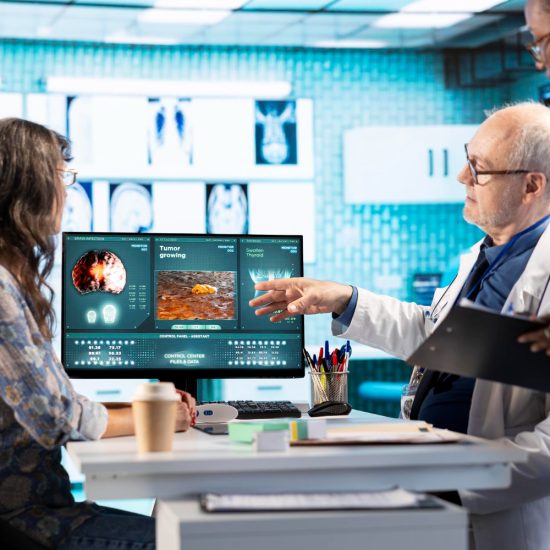
Experts in the field are urging occupational health professionals to treat AI outputs as a starting point — not a final answer. Fail-safe checks involve human clinicians reviewing, verifying, and validating AI-generated assessments before they are acted upon. This human-in-the-loop approach ensures that the speed and scale of AI are balanced with the clinical judgment and contextual understanding that only trained professionals can provide.
Key Risks of Unverified AI in Occupational Health Settings
Several significant risks arise when AI is deployed without appropriate oversight in occupational health contexts:
- Algorithmic bias — AI models trained on non-representative datasets may produce skewed recommendations that disproportionately affect specific groups of workers.
- Data quality failures — Inaccurate or incomplete data inputs can lead to flawed health risk assessments.
- Over-reliance and skill erosion — When professionals defer excessively to AI, critical clinical reasoning skills can deteriorate over time.
- Regulatory non-compliance — AI systems may not always account for the latest changes in occupational health legislation, creating potential liability for employers.
- Lack of transparency — Many AI tools operate as “black boxes,” making it difficult for professionals to understand or challenge the reasoning behind a recommendation.
Recommended Fail-Safe Protocols for OH Professionals
Industry bodies and occupational health specialists are recommending the following fail-safe protocols to manage AI risk effectively:
Establish Clinical Review Workflows: No AI output should directly inform a health or fitness-for-work decision without review by a qualified occupational health professional.
Audit AI Tools Regularly: Organizations should conduct periodic audits of AI platforms to assess accuracy, bias, and alignment with current clinical guidance.
Maintain Transparent Documentation: All AI-assisted decisions should be logged with clear records of the human review steps undertaken.
Invest in AI Literacy Training: Occupational health professionals must be equipped to critically evaluate AI tools, understand their limitations, and identify when outputs appear anomalous.
Adopt a Vendor Accountability Framework: Procurement policies should require AI vendors to demonstrate evidence of clinical validation, data governance standards, and regulatory compliance.
Industry Experts Weigh In
Occupational health leaders and professional bodies have been vocal about the need for a measured, safety-first approach to AI integration. While acknowledging that AI can genuinely improve efficiency and enable earlier detection of health issues, they emphasize that the technology must always complement — never replace — the judgment of a trained clinician.
The Society of Occupational Medicine and similar organizations have begun developing guidance frameworks to help practitioners navigate AI adoption responsibly, including criteria for evaluating the trustworthiness of AI-based health tools.
Moving Toward Responsible AI Adoption
Responsible AI adoption in occupational health is not about resistance to technology — it is about ensuring that innovation serves worker wellbeing rather than undermining it. A collaborative model, in which AI handles data-intensive, repetitive analytical tasks while human professionals focus on high-stakes clinical and ethical decisions, represents the gold standard.
Regulatory bodies are also beginning to catch up. The EU AI Act, for instance, classifies certain workplace health AI applications as high-risk, mandating transparency, human oversight, and rigorous testing before deployment. Occupational health professionals who proactively embrace these principles will not only protect their patients and clients but also position their organizations as leaders in ethical, compliant AI use.
Conclusion
The message from the occupational health community is clear and urgent: AI is a powerful tool, but it is not an infallible one. Fail-safe checks, clinical oversight, and a commitment to ongoing evaluation are not optional extras — they are fundamental professional obligations. By adopting robust verification protocols today, occupational health professionals can harness the full potential of AI while safeguarding the workers who depend on their expertise.