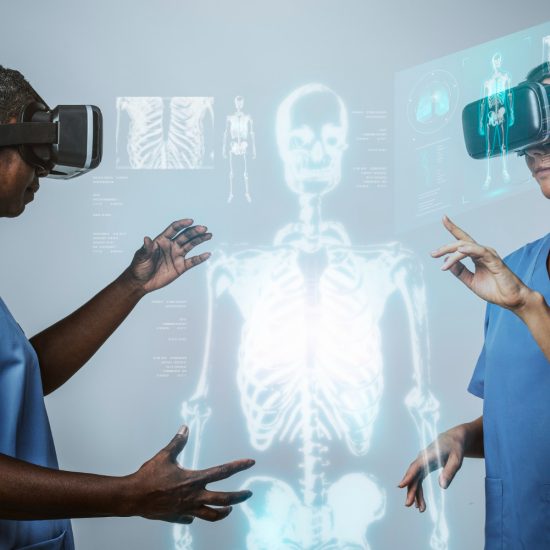
AI is no longer a side experiment in healthcare. Today, it shows up in exam rooms, call centers, revenue cycles, and security operations. However, a critical gap is forming — some organizations are redesigning how work gets done, while others are still running pilots.
The Growing AI Readiness Divide
Research conducted with senior healthcare executives in the United States — published in the New England Journal of Medicine — reveals a widening readiness divide. Some health systems are building governance, security, and workforce models to scale AI safely. Others, meanwhile, remain stuck in proof-of-concept mode. Consequently, outcomes are diverging across productivity, workforce strain, cost-to-serve, and organizational resilience.
The question is no longer whether AI belongs in healthcare. Instead, the question is how quickly organizations can operationalize it — safely, responsibly, and at scale. Microsoft works with more than 170,000 healthcare customers globally, helping them move from pilot to production with enterprise-grade security, privacy, and compliance.
Accelerating Discovery and Clinical Development
Frontier organizations treat AI as an always-on research partner. They use it to compress the time needed to find, synthesize, and act on evidence across functions. The result is not just faster tasks — it is faster decisions and a more scalable path from insight to impact.
UCB: Secure AI for Faster Knowledge Work
UCB built SKAI, a secure internal platform on Microsoft Azure for generative and agent-based AI. This platform helps teams apply knowledge faster and operationalize AI with governance built in from the start.
Syneos Health: Faster Clinical Trial Activation
Syneos Health uses AI to help teams analyze large, complex data sets across the clinical development lifecycle. Teams report reducing time for clinical trial site activation by roughly 10%. Additionally, enhanced predictive modeling helps identify risks earlier and engage clinical partners more effectively, ultimately speeding lifesaving therapies to patients.
Advancing AI in Clinical Care Delivery
In care delivery, transformation happens when AI enters the flow of work. It reduces cognitive load, cuts documentation burden, and gives time back to clinicians. Furthermore, frontier organizations use AI to shift capacity toward patients rather than screens.
Intermountain Health: Cutting Documentation Time
Intermountain Health adopted Microsoft Dragon Copilot to reduce administrative load on clinicians. As a result, clinicians report a 27% reduction in time spent on notes per appointment. This shift reduces cognitive burden and enables more meaningful patient engagement throughout the day.
Cooper University Health Care: Four Minutes Back per Visit
Cooper University Health Care embeds AI directly into clinical workflows to cut documentation time. Clinicians report saving more than four minutes per patient visit on documentation. Moreover, teams experience less burnout and engage more meaningfully with patients, demonstrating how AI can rehumanize care at scale.
Mercy: Ambient AI for Nursing Workflows
Nurses carry a heavy documentation burden at the center of care delivery. Mercy uses AI to capture and structure information in the flow of work. High-use nurses report saving 8 to 24 minutes per shift. Additionally, the organization recorded a 21% reduction in documentation latency and a 4.5% increase in patient satisfaction from its initial rollout.
Streamlining Healthcare Operations with AI
Frontier transformation requires more than point solutions. It demands an AI-ready operating foundation that connects people, processes, and data across the entire organization. Therefore, leading organizations use copilots and agents to standardize work, automate routine interactions, and deliver consistent experiences at scale.
Bupa APAC: Building an AI-Ready Foundation
Bupa APAC uses Microsoft 365 Copilot and GitHub Copilot to streamline operations and improve customer experiences. Their workforce generated more than 410,000 lines of AI-assisted code, initiated more than 30,000 Copilot chats, and accelerated more than 100 AI use cases to improve care.
CareSource: Scaling Service with Automation
CareSource applies AI to support operational scale while keeping a human touch. By modernizing platforms and automating slow service processes, the organization reduced documentation time by 75%, saved over $125,000 through automation, and boosted developer productivity by up to 30%.
Strengthening Cyber Resilience Through AI
Cyber resilience is a prerequisite for transformation. As care becomes more digital, AI must help defenders act at machine speed while maintaining trust and compliance. In healthcare, disruption can compromise patient safety — which means lagging security maturity can erase hard-won digital gains.
St. Luke’s University Health Network: Saving 200 Hours per Month
St. Luke’s University Health Network uses Microsoft Security Copilot agents to accelerate phishing alert triage and generate incident reports in minutes rather than hours. The organization saves nearly 200 hours per month, freeing security teams to focus on higher-value investigations.
Three Moves to Start Frontier Transformation
Organizations looking to begin can focus on three proven moves:
- Start with workflows, not technology. First, identify the highest-friction moments — documentation, imaging backlogs, member service, and security triage — and design AI interventions that measurably reduce time and risk.
- Get your foundation right early. Next, prioritize secure access, identity, and data governance so copilots and agents have the right context without compromising privacy or compliance.
- Make it real, and make it stick. Finally, operationalize responsible AI with oversight, evaluation, and human-in-the-loop processes, and invest in change management so adoption scales beyond early enthusiasts.
The competitive bar is moving quickly. Waiting to act means higher costs, slower throughput, and greater strain on already-stretched teams. Organizations that embed AI across clinical, operational, and administrative workflows today will lead the future of healthcare delivery.