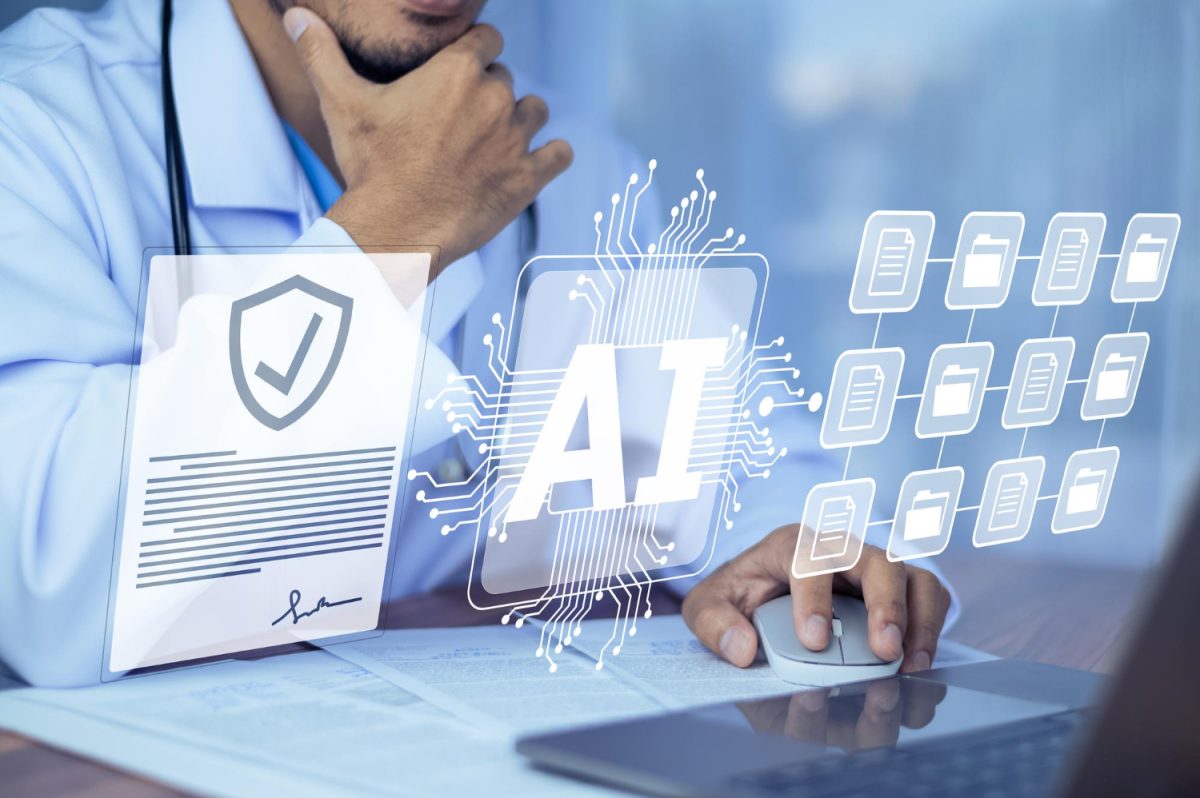
What Is Oracle Health Clinical AI Agent?
Oracle Health has expanded its Clinical AI Agent note generation tool to inpatient and emergency department settings across the United States. The announcement came at HIMSS26 in Las Vegas on March 11, 2026, drawing significant attention from healthcare technology leaders.
The tool addresses one of medicine’s most persistent problems: documentation burden. Doctors spend hours each day writing clinical notes — time taken away from patients. Oracle’s solution automatically generates comprehensive draft notes from real-time patient encounters. Moreover, it organizes symptoms, treatments, and multi-clinician interactions into a single, structured document ready for clinician review.
Furthermore, the system draws on data from within Oracle Health Foundation EHR. It pulls from triage notes, initial examinations, re-examinations, lab results, and imaging findings to build a complete picture of each patient visit.
How It Works in Emergency and Inpatient Settings
Emergency Department Workflow
In emergency departments, speed is everything. Therefore, the Clinical AI Agent captures information as patient encounters unfold in real time. It drafts an encounter note covering:
- Reason for visit
- Medical history and relevant risk factors
- Clinical findings and re-examination notes
- Lab and imaging results discussed during the visit
- Previous treatments administered
After the encounter, clinicians quickly review, edit, and sign the generated draft. Consequently, documentation becomes faster and more intuitive — even during chaotic, high-acuity shifts.
Inpatient Workflow
In inpatient care, multiple clinicians often treat one patient. This complexity makes consistent documentation especially difficult. The AI Agent addresses this by pulling from prior days’ notes and the current clinical conversation. It incorporates:
- Overnight events and observations
- Recent imaging findings
- Medication updates
- Consultant recommendations
As a result, clinicians receive a comprehensive draft progress note covering every phase of hospitalization. The system also produces multiple notes per encounter, including admit notes and progress notes. Additionally, it accurately identifies the voices of patients, caregivers, and clinicians — providing context-aware documentation throughout.
Real-World Results: AtlantiCare’s Success Story
A 41% Drop in Documentation Time
New Jersey-based AtlantiCare offers compelling evidence of the tool’s impact. After early success in ambulatory care settings — where it achieved a 41% reduction in documentation time — AtlantiCare expanded the deployment to all its emergency departments.
The results carried over directly. Providers in high-acuity areas gained back significant time, enabling them to stay focused on patients rather than screens.
Jordan Ruch, Chief Information Officer at AtlantiCare, described the shift in clinician experience: documentation has become lighter and more intuitive, fundamentally changing the dynamic of an emergency shift.
This case study highlights a broader point. When AI handles the administrative layer of healthcare, clinicians reclaim the cognitive bandwidth to do what they trained for — caring for patients.
Key Features of the Note Generation System
Semantic Reasoning, Not Just Text Processing
Oracle’s Clinical AI agents go beyond transcription. They use semantic reasoning to understand clinical meaning. This ensures that insights are contextually relevant, not just textually accurate.
Multi-Agent Collaboration
The agents function as a coordinated system. They share context and collaborate in near real time, increasing efficiency and enabling process automation across the entire clinical encounter.
Proven Scale
Since its launch just over a year ago, Oracle Health Clinical AI Agent note generation has saved doctors more than 200,000 hours across all providers in the United States. This figure underscores the technology’s readiness for wide-scale deployment — not just pilot programs.
What Healthcare Leaders Are Saying
Healthcare executives who have deployed the tool highlight two consistent themes: reduced burnout and improved care quality.
Dr. Randy Thompson, Chief Health Analytics Officer at Billings Clinic – Logan Health, noted that automating note generation allows providers to spend less time on paperwork and more time focused on patients — even in fast-paced environments like the emergency department. He further emphasized that the technology improves both efficiency and work-life balance for clinical staff.
Seema Verma, Executive Vice President and General Manager of Oracle Health and Life Sciences, framed the issue directly: clinicians in emergency settings should never have to choose between caring for patients and keeping up with documentation. The Clinical AI Agent, she explained, is built for the real conditions of emergency and inpatient care.
Why This Technology Matters for Patient Care
The Documentation Crisis in Medicine
Physician burnout is a growing crisis in U.S. healthcare. Administrative work — especially documentation — ranks among the top drivers. Studies consistently show that doctors spend nearly as much time on documentation as they do on direct patient interaction.
AI as a Practical Solution
Oracle’s Clinical AI Agent represents a practical response to this problem. Rather than replacing clinical judgment, it handles the drafting layer so that clinicians can focus on reviewing, refining, and deciding. This human-in-the-loop approach keeps doctors in control while removing the most time-consuming parts of documentation.
A Step Toward Sustainable Healthcare
Ultimately, tools like Oracle Health Clinical AI Agent point toward a more sustainable model of care delivery. When clinicians spend less time at keyboards, they experience less burnout, make fewer documentation errors, and build stronger patient relationships. For healthcare systems under constant pressure to do more with less, that shift is not a small thing — it is transformational.