What Is the STOMP Program?
The United States government is stepping up its fight against one of the most pervasive health threats of the modern era. On April 2, 2026, the Advanced Research Projects Agency for Health (ARPA-H), operating under the Department of Health and Human Services (HHS), launched a landmark $144 million initiative. Its name is STOMP — Systematic Targeting Of MicroPlastics.
STOMP aims to build a comprehensive scientific toolbox for measuring, researching, and ultimately removing microplastics and nanoplastics (MNPs) from the human body. The program targets one of the most pressing and least understood dangers in public health today. HHS Secretary Robert F. Kennedy Jr. described the initiative as a decisive response to a growing threat.
“Americans deserve clear answers about how microplastics in their bodies affect their health,” Kennedy said. “Through ARPA-H’s STOMP program, we will measure microplastic exposure, identify sources of risk, and develop targeted solutions to reduce it.”
The program runs nationwide and is led by ARPA-H Program Managers Dr. Ileana Hancu and Dr. Shannon Greene. Together, they are focused on creating tools that are fast, affordable, and broadly accessible — not limited to elite research institutions.
Why Microplastics Are a Growing Health Crisis
The Invisible Invaders in Your Body
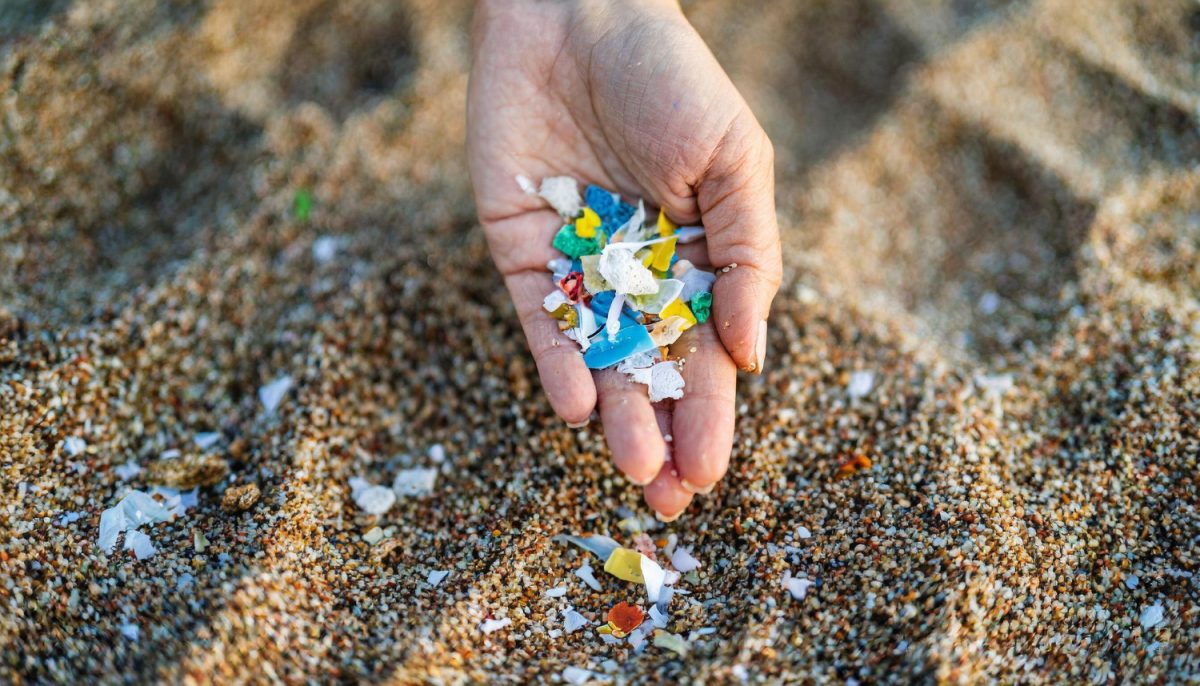
Microplastics are tiny plastic particles measuring less than five millimeters in length. They enter the human body through food, water, and air. Researchers have already detected them in lungs, arterial plaques, and brain tissue. Animal studies confirm they cause disease. Human studies show a strong correlation with serious health risks including cancer, hormone disruption, infertility, heart disease, and neurodegenerative disorders such as Parkinson’s and dementia.
Yet despite this evidence, the scientific community remains significantly limited in its understanding. Currently, there is no precise, standardized method to measure microplastics in human organs. Moreover, different types of plastic behave differently inside the body, making a blanket solution impossible.
The Knowledge Gap Scientists Must Close
ARPA-H Director Alicia Jackson, Ph.D., put it plainly: “Microplastics are in every organ we look at — in ourselves and in our children. But we don’t know which ones are harmful or how to remove them. The field is working in the dark. STOMP is turning on the lights.”
The core problem is measurement. Without reliable, consistent tools to quantify microplastic levels across tissues and organs, scientists cannot agree on the extent of accumulation. Consequently, developing safe and effective interventions becomes impossible. As ARPA-H summarized: “We can’t clear what we can’t measure.”
Additionally, microplastics have been found in 93% of bottled water. Bottle-fed infants face especially high exposure through plastic baby bottles. These particles also act as carriers for toxic chemicals, endocrine disruptors, and antibiotic-resistant bacteria — compounding the danger far beyond plastic particles alone.
Phase One: Measure Before You Can Treat
Building Gold-Standard Diagnostic Tools
STOMP unfolds across two distinct phases. Phase one focuses on measurement and mechanism. During this phase, STOMP researchers will design experiments to map how microplastics distribute throughout the body. They will also develop gold-standard measurement methods, including a clinical test capable of quantifying individual microplastic burden at scale.
This is crucial because current measurement techniques vary widely across laboratories, producing inconsistent results. The Centers for Disease Control and Prevention (CDC) will serve as an independent validator, ensuring these new methods meet scientific standards the entire field can trust.
Furthermore, phase one will produce a risk stratification mechanism — essentially a ranking system for plastic materials based on their biological harm. This system will give scientists, policymakers, and industry leaders a shared answer to the most urgent question: which microplastics need to be addressed first, and in what ways?
“A key first step is to measure microplastics accurately and understand how they reach different organ systems,” explained Dr. Hancu. “So we must establish a solid, shared foundation for precise measurement and mapping.”
Phase Two: Targeted Removal From the Body
When Science Meets Solutions
After establishing measurement baselines and understanding mechanisms, STOMP moves into phase two: removal. This is where the program’s true ambition lies. Different microplastics accumulate in different organs, cross different cellular barriers, and disrupt different biological pathways. Therefore, removal strategies must be equally targeted and precise.
ARPA-H plans to draw on pharmaceutical biology and bioremediation science — essentially reversing techniques used in environmental clean-up — to develop clinically safe strategies for reducing microplastic burden in human tissues. Dr. Shannon Greene noted that complete separation from plastics is not realistic in today’s world.
“They are in everything we touch — our clothes, the materials from which we get our food and water,” she said. “We need to understand how microplastics are distributed throughout the body and what harm they are causing before we can take the next leap forward.”
ARPA-H Director Jackson added that STOMP aims to accomplish in five years what the broader scientific field has been unable to achieve in decades.
The EPA’s Role in Regulating Microplastics
A Two-Front Approach to Plastic Pollution
STOMP does not stand alone. Alongside the HHS announcement, the Environmental Protection Agency (EPA) revealed plans to designate microplastics and pharmaceuticals as priority contaminant groups under the Safe Drinking Water Act. EPA Administrator Lee Zeldin called it a turning point in addressing plastic pollution in the nation’s water supplies.
“For too long, Americans have been ignored as they sound the alarm about plastics in their drinking water,” Zeldin stated. “This ends today.”
The EPA’s draft Sixth Contaminant Candidate List (CCL 6) also includes per- and polyfluoroalkyl substances (PFAS), pharmaceuticals, and disinfection byproducts — all linked to serious health risks. Together, the HHS and EPA efforts represent a broad, coordinated federal response to microplastic contamination across both the human body and the environment.
What This Means for Public Health
A Foundation That Protects Everyone
The STOMP program is designed with equity in mind. Its tools are meant to be affordable and widely available — not confined to specialized clinics or expensive treatments. This approach recognizes that microplastic contamination is not a niche problem. It affects all Americans, across every demographic.
Microplastic-related illnesses cost the US healthcare system an estimated $250 billion in 2018 alone. Investing $144 million now to build measurement infrastructure, understand health risks, and develop removal strategies could prevent significantly higher downstream costs — both in dollars and in human health.
Moreover, STOMP prioritizes those at greatest risk, including children and infants. As the science matures, its findings will also inform future environmental policy and industrial standards for plastic use, giving the initiative implications well beyond medicine.
In summary, STOMP represents a turning point — the moment the United States committed to treating microplastics not as a distant concern, but as a clear and present public health emergency.