A Game-Changing Investment in AI-Driven Diagnostics
Mayo Clinic has joined a $4.9 million seed funding round for ViewsML, an emerging healthcare technology startup building what it describes as the world’s first virtual biomarker library. Wittington Ventures led the round. Together, these two backers are placing a significant bet on a new approach to pathology — one that could reshape how clinicians detect disease and personalize treatment.
This investment signals a broader shift in how top-tier health systems view artificial intelligence. Rather than simply adopting AI tools, institutions like Mayo Clinic now actively fund the companies building them.
What Is ViewsML and Why It Matters
Building the First Virtual Biomarker Library
ViewsML is developing a first-of-its-kind platform that uses AI to extract diagnostic insights directly from standard pathology images. Traditionally, biomarker testing requires separate, often expensive laboratory procedures. ViewsML changes that model entirely.
Instead of running additional lab tests, the platform analyzes existing tissue slide images and identifies biomarkers virtually. This approach eliminates redundant steps, reduces cost, and speeds up the diagnostic process. Furthermore, it opens the door to identifying markers that conventional staining methods might miss altogether.
Targeting a Critical Gap in Diagnostic Medicine
Biomarker data drives treatment decisions in oncology, rare disease diagnosis, and several other fields. Yet access to comprehensive biomarker profiling remains uneven. Many patients — especially those in under-resourced settings — do not receive the full scope of testing their conditions warrant. ViewsML aims to close that gap by making virtual biomarker analysis broadly accessible.
How the $4.9M Seed Round Came Together
Wittington Ventures Leads the Charge
Wittington Ventures, the venture arm of the Weston family’s holding company, led this seed round. The firm focuses on early-stage companies in health, food, and retail — and ViewsML fits squarely within its health innovation mandate. Wittington’s leadership of the round brings both capital and strategic credibility to ViewsML’s commercialization push.
Mayo Clinic Joins as a Strategic Backer
Mayo Clinic’s participation adds significant weight to the investment. As one of the most respected medical institutions in the world, Mayo’s backing functions as both financial support and a powerful validation signal. It tells the broader market that a clinically rigorous institution sees genuine promise in virtual biomarker technology.
Moreover, Mayo Clinic’s involvement likely opens doors to real-world research partnerships, clinical validation studies, and pilot deployments — all of which accelerate a startup’s path to commercial scale.
Understanding Virtual Biomarker Technology
From Physical Staining to AI-Powered Analysis
Conventional pathology relies on physical staining — a process where laboratory technicians apply chemical dyes to tissue samples to highlight specific structures or proteins. This process works, but it has limitations. It takes time, consumes tissue, and requires a separate test for each biomarker of interest.
Virtual biomarker staining works differently. AI models trained on large datasets of pathology images learn to recognize the visual signatures of different biomarkers — without any physical staining at all. The result is faster, more cost-effective analysis that can run on existing slide images.
Why This Approach Is Clinically Significant
Speed matters enormously in diagnosis. When a patient needs answers quickly — particularly in cancer care — delays in biomarker results can delay treatment decisions. Virtual biomarker platforms reduce that waiting time. Additionally, because the process is software-driven, it scales readily. A single AI model can analyze thousands of images with consistent accuracy, reducing the variability that sometimes affects human-led analysis.
How AI Powers Pathology Image Analysis
Deep Learning at the Core
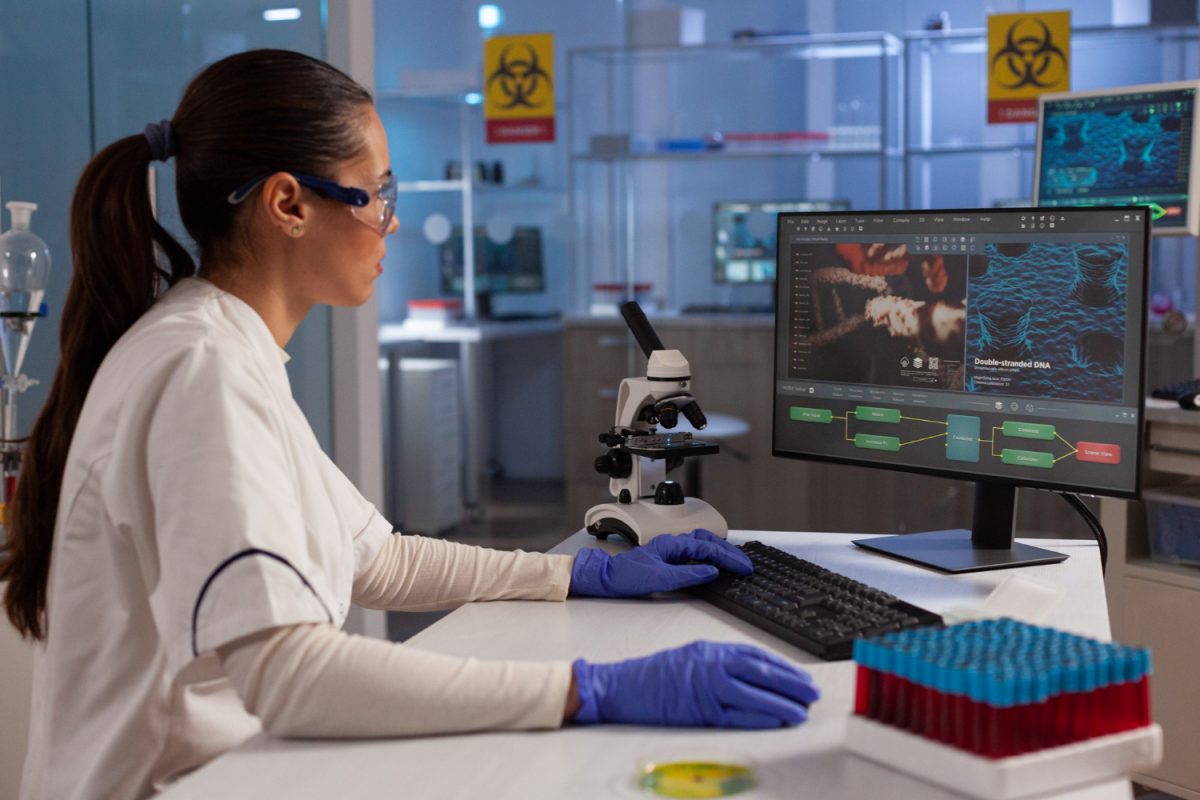
ViewsML’s platform relies on deep learning, a branch of AI that excels at recognizing complex visual patterns. Deep learning models process pathology images at a pixel level, identifying subtle features that correlate with specific biomarkers. Training these models requires vast quantities of labeled pathology data — and partnerships with institutions like Mayo Clinic provide exactly that kind of high-quality clinical data.
Integration With Existing Workflows
One critical advantage of ViewsML’s approach is compatibility with existing laboratory infrastructure. The platform analyzes standard digital pathology images, meaning hospitals do not need to replace their current equipment. Instead, they layer AI-powered virtual analysis on top of workflows they already use. This reduces adoption friction and shortens implementation timelines considerably.
The Promise of Precision Medicine
Matching Treatment to the Individual Patient
Precision medicine depends on detailed molecular and biomarker data. The more accurately clinicians can profile a patient’s disease, the more precisely they can select therapies. ViewsML’s virtual biomarker library directly supports this goal. By expanding the scope of biomarker data available from a single tissue sample, the platform gives clinicians richer information — and richer information leads to better treatment decisions.
Reducing Reliance on Invasive Procedures
Beyond speed and cost, virtual biomarker analysis holds promise for reducing the need for repeated biopsies. When a single sample yields broader biomarker coverage, clinicians gain more insight from fewer invasive procedures. That directly benefits patients — fewer procedures means less discomfort, lower risk, and reduced healthcare costs.
What This Funding Means for Healthcare Innovation
Accelerating Commercial Growth
ViewsML plans to use the seed funding to accelerate commercialization of its AI-driven virtual biomarker staining platform. That means expanding its team, deepening its clinical partnerships, and moving toward broader market deployment. With Mayo Clinic and Wittington Ventures behind it, the company enters that growth phase with strong institutional support.
A Blueprint for Health System Investment in AI
This deal also illustrates a growing trend. Health systems are moving beyond passive adoption of health IT tools. Increasingly, they invest directly in early-stage companies whose technologies align with their clinical and research priorities. Mayo Clinic’s participation in the ViewsML round exemplifies this shift — and it sets a precedent for how academic medical centers can play an active role in shaping the next generation of diagnostic technology.