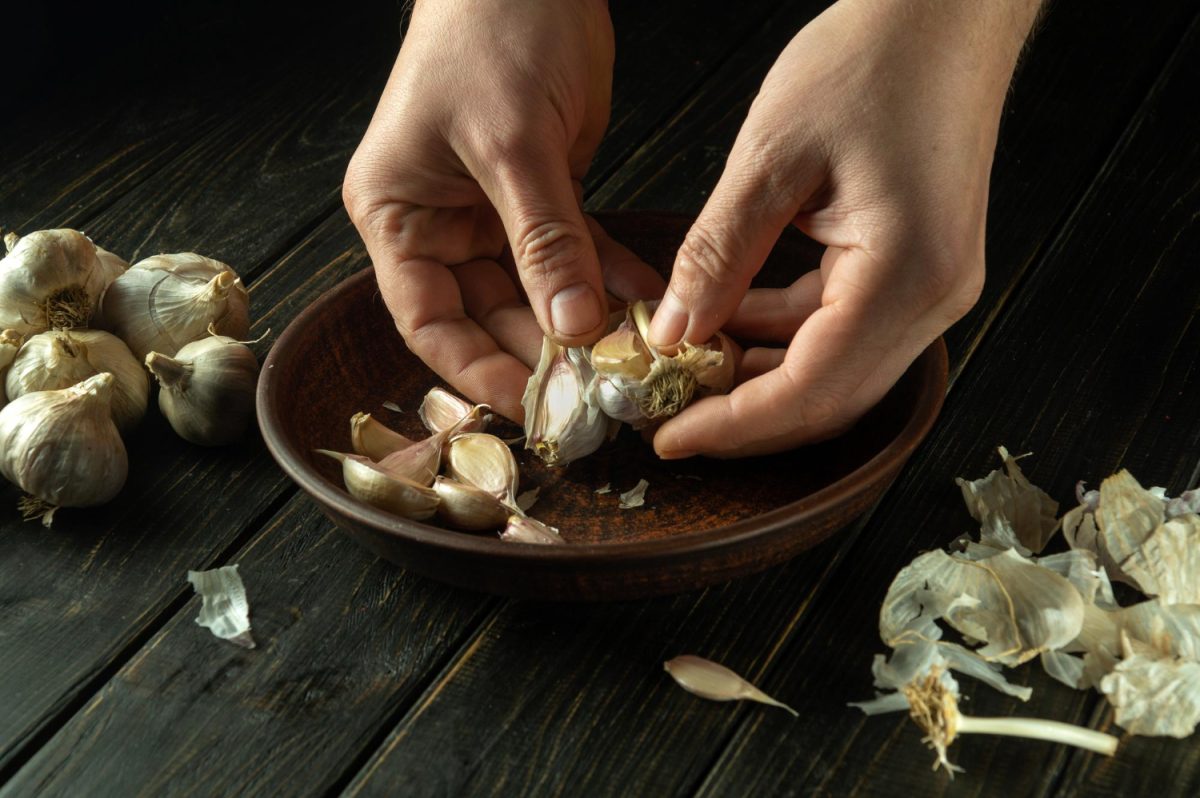
Garlic has been a staple of traditional medicine for thousands of years. Now, modern science is uncovering a new reason to take it seriously. A bioactive compound found in aged garlic extract may help slow muscle decline in older adults. Furthermore, this discovery could offer a simple, affordable, and natural approach to healthy aging.
What Is S1PC?
A Sulfur Compound Found in Aged Garlic Extract
S-1-propenyl-L-cysteine, commonly known as S1PC, is a sulfur-containing amino acid. It occurs naturally in aged garlic extract (AGE). Unlike fresh garlic, aged garlic extract undergoes a long fermentation process. This process concentrates beneficial bioactive compounds, including S1PC.
Garlic (Allium sativum) contains many health-supporting compounds. These include allicin in fresh garlic and S-allyl-L-cysteine (SAC) in aged extract. However, researchers now identify S1PC as particularly promising. Its pharmacological properties have attracted growing attention in nutraceutical research.
How S1PC Works in the Body
Inter-Organ Communication Is the Key Mechanism
S1PC does not act on muscles directly. Instead, it triggers a multi-step biological process. First, S1PC activates an enzyme called LKB1 in fat tissue. Next, this activation prompts fat tissue to release a key anti-aging enzyme called eNAMPT into the bloodstream. Then, eNAMPT travels to the brain, where it activates the hypothalamus. Finally, the hypothalamus communicates with muscles through the sympathetic nervous system.
This chain reaction is significant. It shows that a single dietary compound can coordinate communication between organs. Moreover, it highlights the critical role that fat tissue plays in maintaining muscle health during aging.
What the Study Found
Promising Results in Aged Mice
A collaborative research team in Japan conducted the study. Researchers from the Institute for Research on Productive Aging (IRPA) in Tokyo worked alongside scientists from Wakunaga Pharmaceutical Co., Ltd. in Hiroshima. Their findings appear in the journal Cell Metabolism, published on May 7, 2026.
The team administered S1PC to aged mice over a long period. The results were notable. S1PC treatment reduced frailty scores. It also increased skeletal muscle force. Additionally, it restored core body temperature in the animals. These outcomes point to real improvements in physical function. They suggest that S1PC could become a nutraceutical tool to fight age-related muscle decline, also known as sarcopenia.
Importantly, the researchers also noted that S1PC may complement other anti-aging strategies. For example, it could work alongside NAD⁺-boosting compounds such as nicotinamide mononucleotide (NMN) and nicotinamide riboside (NR).
Safety Profile and Traditional Use
Centuries of Use Support S1PC’s Safety
One major advantage of S1PC is its long history of safe use. Aged garlic extract has been consumed across generations in many cultures. Ancient Egypt, Greece, China, and India all relied on garlic for health and vitality. Crucially, no adverse effects from its consumption have been reported historically.
This established safety record makes S1PC an attractive candidate for further development. Unlike pharmaceutical drugs, nutraceuticals often face fewer regulatory barriers. Moreover, they tend to be more accessible and affordable for older adults seeking preventive care.
What Researchers Say Next
Human Trials and Brain Studies Are on the Horizon
The current findings are encouraging, but researchers are clear about next steps. Lead researcher Dr. Imai emphasizes that further work is needed. Specifically, scientists must evaluate S1PC’s effects on muscle function in humans. Long-term effects also require careful study.
Additionally, the role of LKB1 in the human brain is not yet fully understood. Evaluating its presence and function will be critical. As a result, clinical trials and deeper mechanistic studies are the logical next phase of this research.
Dr. Kiyoshi Yoshioka, one of the study’s first authors, shared his motivation: the gap in proactive care for older adults drove this research. He hopes that a simple dietary supplement could meaningfully improve strength and fitness in aging populations.
Key Takeaway
Garlic as a Nutraceutical Frontier
This study represents a meaningful step forward in anti-aging science. S1PC from aged garlic extract activates a cascade that connects fat tissue, the brain, and skeletal muscle. In aged mice, this process visibly improved physical function. Therefore, the compound holds real promise as a daily supplement to support healthy aging.
Consequently, S1PC may soon join a growing list of evidence-based nutraceuticals for older adults. While human trials are still needed, the science is compelling. A compound found in a common kitchen ingredient could help millions of people maintain strength and independence as they age.