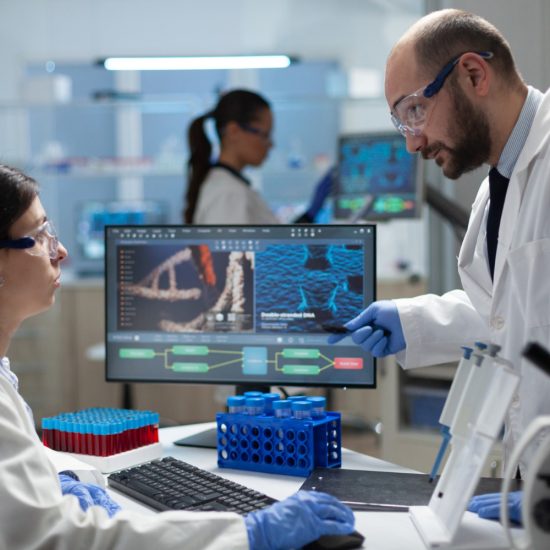
Modern laboratories demand more than clever algorithms. They need robust, purpose-built AI laboratory infrastructure to handle massive computational workloads. Anglia Ruskin University (ARU), in partnership with global semiconductor leader Arm, has opened the ARU Arm AI Lab on its Cambridge campus. Together, this facility bridges the gap between theoretical data science and real-world lab applications. The focus is clear: accelerate medical technology and life sciences research using cutting-edge hardware and specialized tools.
What Is the ARU Arm AI Lab?
The ARU Arm AI Lab is a dedicated research hub. It brings together researchers, engineers, and students to explore the intersection of semiconductor design and machine learning. Furthermore, it provides the physical space and high-performance hardware necessary to turn data science concepts into lab-ready solutions. The lab directly targets two demanding fields — healthcare and the life sciences — where computational accuracy and speed are non-negotiable.
Advanced Hardware Powering the Facility
Arm Architecture at the Core
At the heart of this facility sits a suite of powerful computers built on Arm architecture. For lab managers, understanding the hardware layer is just as important as understanding biological reagents. Unlike traditional server setups, Arm-based systems optimize both power efficiency and high-throughput processing. As a result, they handle modern machine learning (ML) workloads far more effectively than legacy infrastructure.
Why Hardware Efficiency Shapes Research Speed
Hardware efficiency directly determines the speed of data iteration. Faster processing means faster, more reliable results. Consequently, labs can run more experiments within shorter timeframes, reducing critical bottlenecks in research pipelines. For life sciences labs, this improvement is not merely convenient — it is truly transformative.
Edge AI for Real-Time Lab Data Processing
Processing Data at the Source
One of the lab’s most valuable capabilities is support for edge AI. This technique processes data locally on the device, rather than routing it to a distant cloud server. Moreover, this approach is critical for medical technology applications. Diagnostic tools and wearable health sensors require low latency and high reliability. By moving computation closer to the data source, labs achieve faster results while maintaining stronger data security standards.
Security and Speed in Healthcare Settings
Traditional cloud-based setups introduce delays and data exposure risks. Edge AI eliminates both problems at once. Additionally, local processing reduces dependency on external networks — essential in healthcare environments where data privacy is non-negotiable. The ARU Arm AI Lab makes this capability readily accessible to researchers and students alike.
Machine Learning Techniques Driving Research Innovation
Embedded Computing in Modern Lab Instrumentation
The lab supports a range of advanced methodologies now essential for lab professionals. Embedded computing applies ML techniques directly into specialized hardware, creating smarter lab instrumentation. This integration allows researchers to build more responsive, adaptive tools rather than relying on manual result interpretation.
Pattern Recognition in Biological Datasets
Machine learning algorithms trained on biological datasets can identify complex patterns — in genomic sequencing, proteomic mapping, and diagnostic imaging alike. Importantly, the lab also supports a postgraduate certificate in embedded computing. This program equips students with the specific skills needed to deploy AI across diverse industry contexts.
As ARU’s Laurie Butler, PhD, pro vice chancellor and dean of the faculty of science and engineering, noted, the lab “will ensure our researchers and students have access to the most advanced technology available” to address real-world challenges, particularly in medical technology where AI has enormous potential.
Why Lab Professionals Must Take Note
A Blueprint for Academic-Industry Collaboration
The ARU Arm AI Lab sets a powerful new standard for AI laboratory infrastructure in academic settings. It gives lab managers and principal investigators a practical blueprint for integrating external technical expertise with internal research goals — without disrupting existing workflows.
Predictive Diagnostics and Personalized Medicine
Researchers at the lab focus primarily on life sciences applications. Through advanced AI tools, they are developing techniques for predictive diagnostics and personalized medicine. These applications require rigorous testing against large-scale medical datasets. Notably, the local availability of Arm’s powerful AI capabilities makes that entire process significantly more efficient.
Shantu Roy, vice president of developer relations and customer engagement at Arm, highlighted the broader ecosystem impact: “By bringing together academia and industry around the latest Arm AI technologies, we can accelerate research, support emerging talent, and drive innovation across the wider technology ecosystem.”
Building the Next Generation of Lab Professionals
Ultimately, this lab underscores a growing reality across all scientific disciplines. As AI becomes a standard tool in laboratories worldwide, managing both physical hardware and specialized personnel has become a primary administrative priority. Therefore, institutions that invest in purpose-built AI infrastructure today will be far better positioned to lead life sciences research tomorrow. The ARU Arm AI Lab proves that such investments are not only achievable — they are already well underway.