The Power of Thinking Positively About Aging
Aging is inevitable. However, how you age is not fixed. A growing body of research now confirms what many seniors already know: your attitude toward getting older shapes your physical and mental health more than almost any supplement or diet plan.
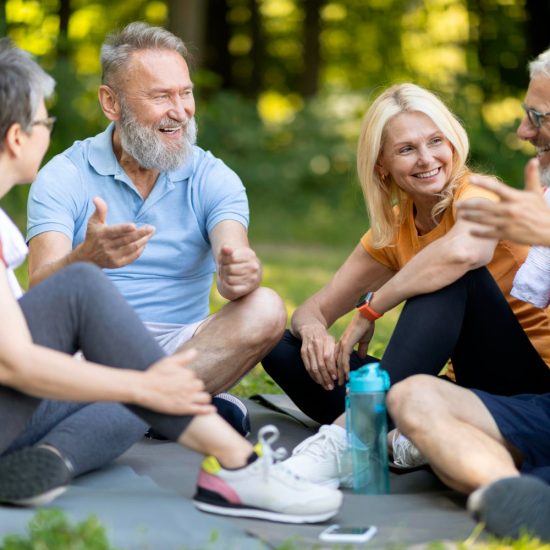
At Atlanta’s C.A. Scott Recreation Center, dozens of women in their 60s, 70s, and 80s gather daily through the city’s free Primetime Seniors program. They stretch, practice yoga, line dance, and take computer classes together. Their secret? A relentlessly positive outlook on life.
“I don’t sit still. I don’t stay home, and I’m always thinking positive,” said 66-year-old Vivian Cook. “Just ask my kids — I’m encouraging them to think positive, too.”
This mirrors exactly what a landmark new study found: a positive attitude toward aging drives measurably better health outcomes.
What the Research Says
A Decade-Long Study of 11,000 Seniors
A new study published in the journal Geriatrics tracked more than 11,000 seniors over roughly a decade. Researchers measured both mental and physical health. They used cognitive exams testing short-term memory and math skills. Additionally, they used a simple walking-speed test — since gait engages cardiovascular, sensory, nervous, and musculoskeletal systems.
The results were striking. Over 45% of participants showed improvement in thinking skills and/or walking speed over time. Furthermore, those with positive attitudes about their aging were significantly more likely to show that improvement.
Further Supporting Evidence
- A 2023 study found that people with more positive feelings about aging reported fewer concentration and focus problems.
- A 2022 study following 14,000 adults over age 50 discovered that those with the highest satisfaction with aging had a 43% lower risk of dying from any cause compared to those with negative attitudes.
- A 2014 study showed that positive people use preventive health services more frequently — catching problems early and staying healthier overall.
Together, these findings build a powerful case: your mindset actively changes your biology.
Real People, Real Results
Staying Active Changes Everything
Marye Hall, 76, deals with high blood pressure and arthritis. She has had both knees replaced. Yet she lives independently, walks every morning, and attends Primetime Seniors almost every day.
“You know, 76 is different than it was 20 or 30 years ago,” Hall said. “Not sitting around the house is so important.”
After retiring from Delta Air Lines in 2008, Hall quickly realized that staying home was not for her. Moreover, she credits regular doctor visits for keeping her on track. “You keep those appointments, you stay tuned into your health and address it, and it gets better,” she added.
Community Fuels Positivity
For Lilla Doe, 74, the program’s greatest gift has been lasting friendship. “If I didn’t come here, I’d be sitting,” she said. “You form real friendships here, and they’re lasting.”
Her friend Sirlene Watts, 67, put it simply: staying positive beats the alternative.
Why Positivity Physically Helps the Body
Confidence Boosts Cognitive Performance
Earlier research shows that people who think positively about aging develop stronger self-confidence in their mental abilities. Notably, that confidence alone improves memory and general cognitive skills — creating a powerful feedback loop.
Resilience and Social Connections
Positive people tend to bounce back faster from setbacks. They also build stronger social networks. Studies consistently show that healthy social connections reduce cognitive decline, lower cardiovascular risk, and add years to life.
Proactive Health Behaviors
Positivity drives action. People who feel good about aging schedule check-ups, follow through on treatments, and engage in physical activity more consistently. Therefore, the mindset does not just feel good — it translates directly into behavior that protects health.
Inspiration from Record-Breaking Achievers
Diana Nyad’s Perspective-Shifting Swim
Dr. Becca R. Levy, co-author of the new study and a professor at the Yale School of Public Health, says the research was partly inspired by long-distance swimmer Diana Nyad. At 64, Nyad completed a record-breaking 110-mile, 53-hour swim from Cuba to Florida.
Nyad had attempted the same swim at 28 — and failed. So what changed? Not just fitness. She credits a deeper perspective gained through age.
“As I got older and I was training hard for these swims, it wasn’t all torture,” Nyad explained. “I was out there in that state of beatific gratitude.”
Now 76, Nyad says she has “no perception of age whatsoever” beyond what she sees in the mirror. Her energy, vitality, and positivity remain fully intact.
Levy’s Takeaway
Levy expected positive thinkers to do better with age. Still, the sheer number of people who actually improved surprised even her. “I started to wonder whether increased creativity and physical endurance are exceptions,” she said, “or whether there’s a large reserve available to more people as they get older.”
The Brain Benefits of Growing Older
A More Efficient Brain
Dr. John Adler, a neurosurgeon and emeritus professor at Stanford, explains that aging brains “prune unproductive neural synapses.” As a result, the brain becomes more efficient — not weaker.
“Generally, as you age, you have a more efficient brain, and I feel that,” said Adler, 72. He adds, with humor, “I’m glad I’m not as stupid as I was when I was young.”
Passion Shapes Epigenetics
Adler believes that staying passionate about meaningful work shapes aging at a biological level. “If you’re passionate about something, you change the epigenetics, and you foster your abilities even further,” he said.
His peers recently inducted him into the National Inventors Hall of Fame for creating the CyberKnife — a robotic tool now used globally to remove tumors. Rather than slowing down, Adler focuses on staying “as useful as I possibly could” every single day.
Practical Tips to Build a Positive Aging Mindset
Four Evidence-Based Strategies
Dr. Levy and other experts offer concrete, actionable steps to build positivity about aging:
- Set small daily goals. Achieving even minor realistic goals builds confidence and reinforces a positive loop.
- Practice positive self-talk. Reframe negative thoughts actively. Looking at positive images of older adults doing meaningful things also helps shift perspective.
- Focus on what you can control. Eating well and exercising regularly strengthen both brain and body, even when some physical changes are unavoidable.
- Surround yourself with positive people. Positivity is genuinely contagious — the people around you shape your own outlook more than most realize.
Levy’s book, Breaking the Age Code, explores how beliefs about aging directly determine how long and how well people live. She hopes this growing body of research encourages doctors to actively promote positive thinking among older patients.