AI Enters China’s Healthcare Frontline
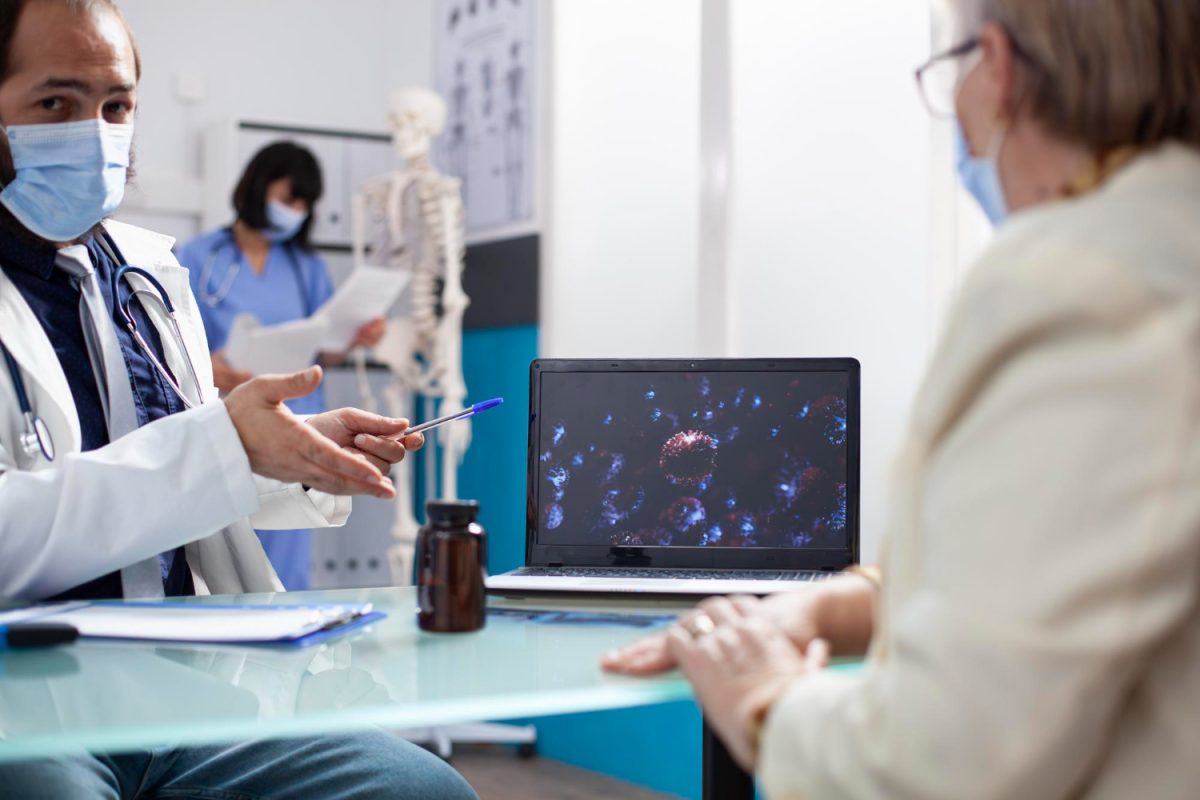
China is accelerating artificial intelligence adoption across key industries. Among all sectors, healthcare stands out as one of the most promising frontiers. Experts say AI can make medical services smarter, faster, and far more accessible. Moreover, the technology holds real potential to narrow long-standing gaps in medical resource distribution across the country.
Today, AI creates new opportunities at every level of the healthcare system. It helps standardize diagnosis. It improves treatment planning. Furthermore, it strengthens service capacity at primary-level clinics and hospitals — places where diagnostic shortages have remained a persistent challenge for years.
Government Policy Drives AI Plus Healthcare
The AI Plus Initiative
China’s Government Work Report this year called for deeper implementation of the AI Plus initiative. It also demands faster rollout of next-generation intelligent terminals and AI agents. Additionally, authorities want greater efforts to promote large-scale commercial AI applications across key industries.
National Health Commission Guidelines
Policy support has gathered significant pace. In November, the National Health Commission and four other government bodies jointly issued a major guideline. That document made primary care a central priority of China’s AI Plus Healthcare strategy. Specifically, it calls for wider AI adoption in diagnosis, medical imaging, and patient services.
By 2030, China aims to make AI-assisted diagnosis widely available in primary care settings. Furthermore, the country targets routine AI use in medical imaging analysis and clinical decision support at secondary and higher-level hospitals. These goals signal a clear, structured path toward full AI integration in the national health system.
Wandong Medical Launches Full-Process AI Agent
A Debut at the 2026 Medical Equipment Fair
The momentum behind AI in healthcare became highly visible at the recent 2026 China International Medical Equipment Fair in Shanghai. There, Wandong Medical — a leading Chinese medical imaging equipment maker — unveiled the industry’s first full-process AI agent for digital radiography (DR).
What Makes This Agent Different?
Previous smart tools addressed only individual stages of a clinical workflow. In contrast, this agent integrates AI across the entire examination process. It covers everything from imaging acquisition through to final diagnosis. According to Guo Hongyu, director of the intelligent imaging institute at Midea Medical Devices Academy, this shift marks a major leap. The system moves away from fragmented tools and toward integrated platforms that evolve through continuous self-learning.
How the DR AI-Agent Works
From Positioning to Diagnosis
Ye Hongnan, product manager for DR at Wandong Medical, explained the agent’s capabilities in detail. It accurately detects more than 20 common chest conditions. These include tuberculosis, pneumothorax, and fractures. Using 3D cameras and AI-based algorithms, the agent helps technicians improve patient positioning accuracy. It also selects personalized exposure settings for each patient. As a result, the images produced align more closely with actual diagnostic needs.
Trained on Millions of Real Images
Beyond image capture, the agent relies on a large AI model developed by Midea’s Corporate Research Center. That model trained on more than four million DR chest images. Crucially, the training data came from diverse devices and regions. This breadth allows the system to identify common chest diseases and automatically generate standardized, structured diagnostic reports.
Self-Learning Through Doctor Interaction
The agent’s self-learning capability sets it apart from conventional tools. It supports real-time interaction with doctors throughout the diagnostic process. Doctors can question, verify, and refine AI-generated judgments at any point. For instance, if a doctor challenges the AI’s reading, the agent explains its reasoning. It can clarify why it identified a lesion as a nodule rather than inflammation. The doctor then reviews the evidence and reaches a final decision. This collaborative loop strengthens both diagnostic accuracy and the AI’s own performance over time.
Closing Diagnostic Gaps at Primary Level
The Core Problem at Grassroots Hospitals
Diagnostic capacity at primary-level medical institutions has long been limited. Significant disparities also persist between hospitals across different regions and tiers. Consequently, patients in rural or underserved areas often receive lower-quality diagnostic support.
Cloud-Based Solutions for Grassroots Doctors
Huang Jiaxiang, general manager of WanLiCloud Healthcare IT Co — an AI imaging innovation platform under Wandong Medical — said the company actively works to extend these solutions to primary-level institutions. Cloud-based imaging services make this expansion practical and scalable.
“The DR AI-Agent addresses a key pain point for primary-level institutions — limited diagnostic capacity,” Huang said. “It enables grassroots doctors to produce high-quality diagnostic reports with AI support.”
This approach directly tackles one of China’s most pressing healthcare challenges. Therefore, it represents one of the most impactful near-term applications of AI in the sector.
China’s 2030 Vision for AI in Healthcare
Moving Beyond Single-Disease AI Products
Wang Zhenchang, an academician at the Chinese Academy of Engineering and researcher at Beijing Friendship Hospital, outlined the road ahead. He stressed that efforts must move beyond narrow, single-disease AI products. Instead, the focus should shift to developing smart imaging systems that cover a full range of conditions. Embedding these systems directly into clinical workflows is equally essential.
A Healthier, Smarter Future
China’s AI Plus Healthcare drive reflects a bold national vision. AI brings efficiency, accuracy, and reach to a healthcare system serving over 1.4 billion people. With strong policy backing, innovative industry players, and a clear 2030 roadmap, AI is not simply boosting China’s healthcare industry — it is reshaping it from the ground up.