A Discovery Hiding in Deep Water
Scientists have uncovered a remarkable trove of marine biodiversity in the deep underwater canyons off Western Australia’s Nyinggulu (Ningaloo) coast. A Curtin University-led study revealed species never before recorded in the region — including the legendary giant squid — and others that may be entirely new to science. The findings mark a turning point in how researchers understand Australia’s deep-sea ecosystems.
The Expedition That Made It Happen
The Western Australian Museum led the ocean expedition aboard the Schmidt Ocean Institute’s research vessel Falkor. The team surveyed the deep Cape Range and Cloates submarine canyons, located roughly 1,200km north of Perth. Researchers collected more than 1,000 samples from depths reaching 4,510 metres. Consequently, the sheer scale of the survey enabled one of the most comprehensive biodiversity assessments ever conducted in this remote region.
How Scientists Found These Species
Environmental DNA: A Game-Changing Tool
Rather than relying solely on cameras and nets, scientists used environmental DNA (eDNA) — genetic material that animals naturally shed into surrounding seawater. This technique allows researchers to identify hundreds of species from a single water sample. Furthermore, eDNA can detect fragile, fast-moving, and rare creatures that traditional survey methods routinely miss.
Lead author Dr Georgia Nester, who conducted this work as part of her PhD at Curtin University, described the approach as transformative. “With eDNA, a single water sample can tell us about hundreds of species at once,” Dr Nester said. “That means we can dramatically expand our understanding of deep-water environments in a way that simply hasn’t been possible before.”
Combining Methods for Greater Accuracy
The team did not rely on eDNA alone. Dr Nester collected water samples spanning the surface to more than four kilometres deep. Scientists then combined eDNA analysis with genetic reference sequences derived from physical specimens. The remotely operated vehicle SuBastian gathered those specimens. Taxonomists identified them, and the WA Museum now permanently houses the collection at its Research Facility to support future taxonomic research.
The Giant Squid: A Historic Detection
A Creature of Myth, Now Confirmed in WA Waters
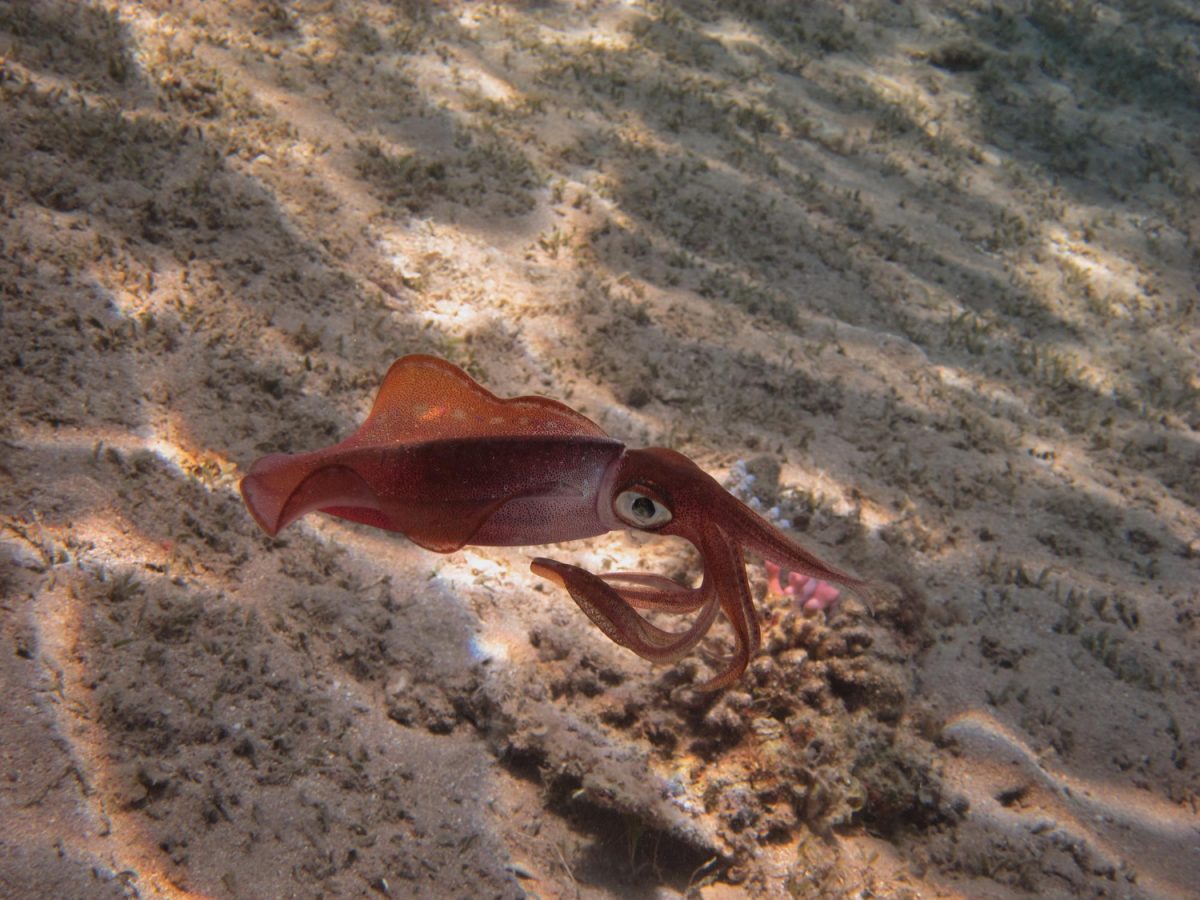
Among the study’s most dramatic findings was the detection of the giant squid (Architeuthis dux). Scientists found traces across six separate samples in both the Cape Range and Cloates Canyons. To put this animal in perspective: giant squid typically grow between 10 and 13 metres — longer than a school bus — and can weigh up to 275 kilograms. Their eyes, measuring up to 30 centimetres in diameter, are the largest in the entire animal kingdom.
WA Museum Head of Aquatic Zoology, Dr Lisa Kirkendale, noted that only two previous records of giant squid exist for Western Australia. Moreover, no sighting or specimen had appeared in over 25 years. “This is the first record of a giant squid detected off Western Australia’s coast using eDNA protocols,” Dr Kirkendale said, adding that it is also the northernmost record of Architeuthis dux in the eastern Indian Ocean.
Deep-Diving Whales Also Detected
Alongside the giant squid, researchers detected two species of deep-diving whales: the Pygmy sperm whale (Kogia breviceps) and Cuvier’s beaked whale (Ziphius cavirostris). These findings further confirm the ecological richness of these rarely studied submarine canyons.
226 Species Across 11 Animal Groups
An Unprecedented Snapshot of Deep-Sea Life
In total, the study detected 226 species spanning 11 major animal groups. These included rare deep-sea fish, cnidarians, echinoderms, squid, and marine mammals. Additionally, dozens of species turned up that scientists had never previously recorded in Western Australian waters. Notable new records include the sleeper shark (Somniosus sp.), the faceless cusk eel (Typhlonus nasus), and the slender snaggletooth (Rhadinesthes decimus).
Dr Nester stressed that a large number of detected species did not match anything currently recorded in scientific databases. “That doesn’t automatically mean they’re new to science,” she said, “but it strongly suggests there is a vast amount of deep-sea biodiversity we’re only just beginning to uncover.”
Depth-Stratified Communities
The research also demonstrated that different water depths host distinctly different ecological communities. Even neighbouring canyons support separate ecosystems. This depth-stratified pattern reveals a layered complexity in deep-sea habitats that scientists are only beginning to map.
Why This Discovery Matters for Conservation
Protecting What We Now Know Exists
Senior author Associate Professor Zoe Richards, from Curtin’s School of Molecular and Life Sciences, emphasised the broader conservation implications. “Deep-sea ecosystems are vast, remote and expensive to study, yet they face growing pressure from climate change, fishing and resource extraction,” she said. “You can’t protect what you don’t know exists.”
eDNA as a Scalable Conservation Tool
Environmental DNA offers a scalable, non-invasive method for building baseline knowledge of deep-sea habitats. This baseline is essential for informed marine park planning, environmental impact assessment, and long-term biodiversity monitoring. As Dr Nester explained, combining eDNA with conventional deep-sea survey techniques enables scientists to build a far more complete picture — one that reveals species, ecosystems, and ecological patterns that would otherwise stay hidden.
The study involved collaboration between Curtin University, the University of Western Australia, the Western Australian Museum, the Minderoo OceanOmics Centre, the University of Tasmania, and Research Connect Blue. The findings appear in the journal Environmental DNA.