HHS Warns Children’s Screen Time Harms Health
The Department of Health and Human Services (HHS) released a major advisory on May 20, 2026, warning about the dangers of children’s screen time. The advisory targets impacts on sleep and mental health. It signals a growing federal concern about how digital devices shape child development. Furthermore, it marks one of the most direct federal statements on the issue to date.
The Surgeon General’s Screen Time Warning
The advisory carries the title “Surgeon General’s Warning on the Harms of Screen Use.” It states clearly that harmful screen use among children and adolescents has become a public health concern. Growing up surrounded by screens — televisions, computers, tablets and smartphones — is now the norm for American children. Consequently, federal health officials believe the issue demands urgent attention at the national level.
The advisory does not single out one type of screen. Instead, it covers the full range of devices children encounter daily. This broad framing reflects how deeply screen use has embedded itself across every aspect of childhood — at home, in schools and during leisure time.
A Public Health Concern, Not Just a Parenting Issue
HHS framing the issue as a public health concern carries significant weight. It elevates screen time beyond individual family decisions. Moreover, it signals that systemic responses — across schools, healthcare providers and policy — may follow. Historically, Surgeon General advisories on public health issues have preceded major regulatory and legislative action.
How Early and How Much: The Scale of Children’s Screen Use
The advisory highlights just how young screen exposure begins. Exposure often starts before a child’s first birthday. From there, it grows steadily as children age. By adolescence, many children spend more time on screens than sleeping or attending school. That statistic alone underscores the urgency of the advisory’s message.
Screen Time Outpacing Sleep and School
The comparison to sleep and school attendance is striking. Both sleep and education rank among the most essential elements of healthy child development. Yet screens now consume more of adolescents’ time than either. This reality drives the advisory’s core concern — that screens are not simply a leisure activity but a dominant force shaping how children grow up.
Screen Time and Sleep Disruption
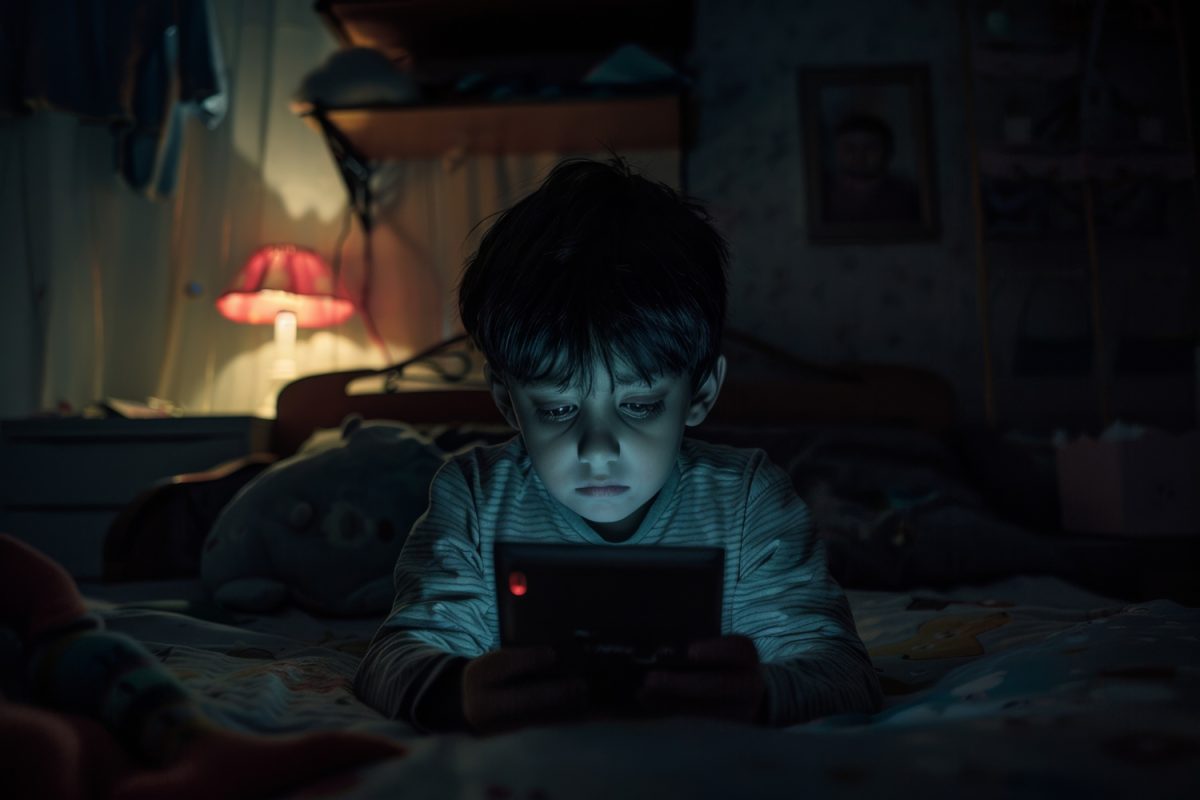
One of the advisory’s central findings focuses on sleep. HHS emphasizes that healthy sleep is fundamental to learning, mood, behavior, physical health and overall development. Screen use — particularly at night — threatens that foundation. Therefore, the advisory identifies sleep disruption as a concern at all stages of life, with children facing especially high risk.
The Role of Blue Light
The advisory specifically addresses blue light wavelengths from screens. Blue light at night may contribute to sleep disruption by interfering with the body’s natural sleep signals. Additionally, the report notes that effects of other wavelengths — including low-frequency wavelengths — have been hypothesized and may warrant further scientific study. This acknowledgment reflects both what researchers know and what they are still investigating.
Why Sleep Matters for Child Development
Sleep deprivation in children carries wide-ranging consequences. Poor sleep affects academic performance, emotional regulation and physical growth. Furthermore, chronic sleep loss during childhood and adolescence links to higher rates of anxiety, depression and behavioral issues. The advisory’s focus on sleep, therefore, connects screen time directly to the broader mental health crisis affecting young Americans.
Mental Health Concerns Driving the Advisory
The rise of smartphones and social media has fueled growing national conversations about children’s mental health. Researchers, clinicians and policymakers have raised alarms about links between heavy screen use and rising rates of anxiety, depression and loneliness among adolescents. The HHS advisory adds federal authority to those concerns. It reflects a consensus building across the public health community that action — not just awareness — is needed.
Technology Use Among Adolescents
Adolescents represent the most screen-saturated age group. Social media platforms, streaming services and messaging apps compete for their attention around the clock. Moreover, smartphones remove the natural boundaries that once limited screen access. As a result, many teenagers experience near-constant connectivity — with little structured time away from devices. The advisory points to this environment as a key driver of the public health concern.
Schools Respond: The LAUSD Screen Time Policy
Even before the HHS advisory, schools across the country were taking action. Last month, the Los Angeles Unified School District (LAUSD) passed a resolution to restrict screen time in all classrooms. The school board voted 6-0 in favor of the measure. The board described the move as making LAUSD a national leader in setting thoughtful, research-based limits on student screen use and classroom technology tools.
Key Elements of the LAUSD Resolution
The resolution established screen time restrictions for each grade level. It also eliminated technology use entirely for students in first grade and under. Additionally, the policy bars student-led use of YouTube and other streaming platforms in school settings. Taken together, these measures represent one of the most comprehensive school-based screen time policies in the country. Other districts may follow LAUSD’s lead, especially now that federal health officials have added their voice to the call for limits.
What Parents and Caregivers Should Know
The HHS advisory does not yet include specific screen time limits or legislative mandates. However, it establishes a clear federal position: current levels of children’s screen use pose a genuine public health risk. Parents and caregivers play a central role in managing children’s exposure. Setting consistent boundaries around screen use — especially in the hours before bedtime — aligns with the advisory’s core recommendations. Additionally, encouraging device-free family time and monitoring the content children consume remain practical steps every household can take.
Health experts broadly agree that no single policy or parental action resolves the issue alone. Instead, a combination of household rules, school policies, platform-level design changes and federal guidance working together offers the strongest path forward.