Introduction
The future of health IT is no longer a distant vision — it is being built today. At Duke Health, senior leaders are pioneering a bold approach to technology adoption, hospital design, and patient care innovation. In a recent conversation, LaDonna Worrell, Senior Director of IT Operations at Duke Health, and Justin T. Collier, MD, Healthcare CTO North America at Lenovo, shared their insights on the trends and expectations shaping modern healthcare technology.
Duke Health’s Hospital of the Future Is Almost Here
Duke Health is preparing to open a brand-new hospital facility in North Carolina within the next three years. But the innovation is already underway. Three units within an existing hospital have been designated as “Beta units” — a computing term for real-world testing environments where products are trialed before full deployment. These units serve as living laboratories where emerging technologies are evaluated and refined. Duke Health also operates simulation labs, giving clinical and IT teams the opportunity to test new tools in controlled settings before scaling them across the entire system.
AI and Assistive Intelligence Are Transforming Healthcare
Artificial intelligence tops the list of technologies reshaping health IT. Justin Collier prefers the term “assistive intelligence,” emphasizing AI’s role as a tool that supports human decision-making rather than replacing it. The numbers back up this momentum — the healthcare industry is currently adopting AI at twice the rate of other industries. From clinical decision support to administrative automation, AI is becoming embedded in nearly every layer of health system operations. Duke Health is positioning itself at the forefront of this shift by integrating AI-ready infrastructure into its long-term planning.
Digital Twins and Virtual Reality Offer Powerful New Capabilities
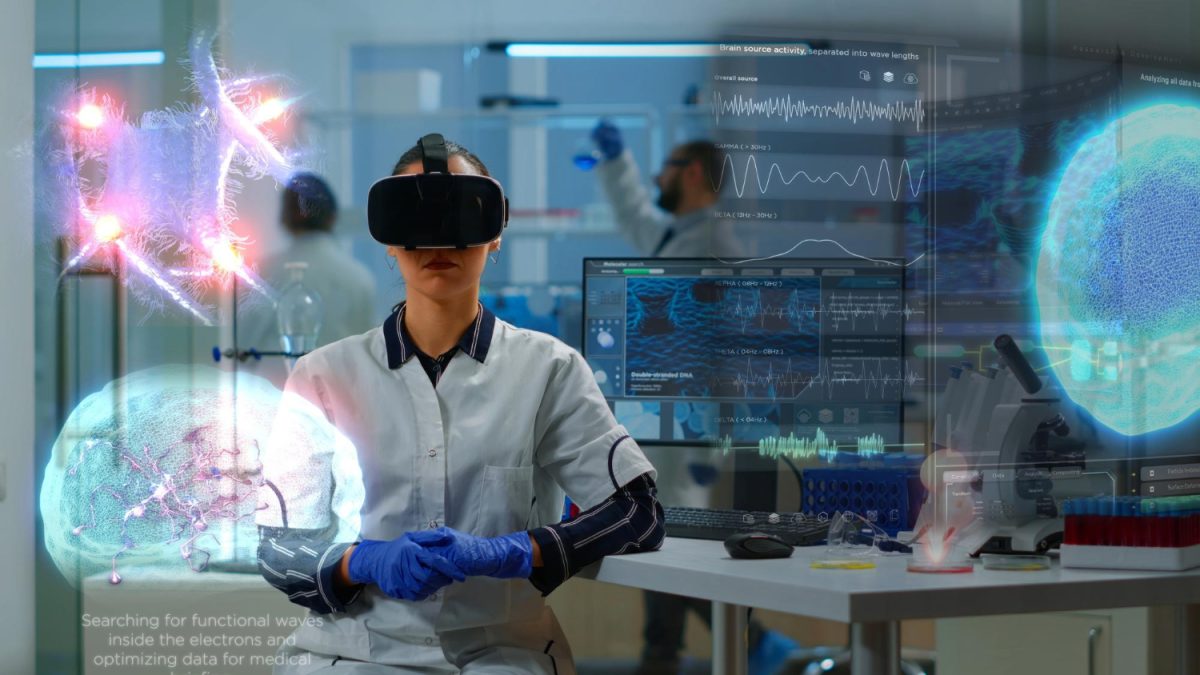
Among the most exciting emerging technologies highlighted by Collier are digital twins and virtual reality. A digital twin is a virtual replica of a physical system or environment, making it invaluable for simulations and strategic planning. In a healthcare context, a digital twin can help hospital administrators model how a layout change will affect nursing workflows, or help clinicians identify the most effective treatment protocol for a specific cancer patient. Virtual reality, meanwhile, is finding dual utility in healthcare — both as an educational tool for training medical staff and as a patient distraction technique during procedures or recovery periods.
Infrastructure Must Support the Next 20 Years
One of the most critical principles guiding Duke Health’s new hospital design is the idea that infrastructure should never hold back technology. Worrell emphasizes that the systems being installed today must be capable of supporting technological advancements over the next two decades — including innovations that do not yet exist. This means investing in high-performance GPUs to power AI applications, robust wireless networks to keep countless connected devices online simultaneously, and flexible physical infrastructure that won’t require costly renovations as technology evolves. Robotics also play a growing role in Duke Health’s technology ecosystem, supporting both clinical and operational functions.
Worrell encapsulates the Duke Health philosophy simply: they “will always be Beta” — meaning perpetually agile, forward-thinking, and ready to adapt ahead of the technology curve.
Stakeholder Involvement Is Essential to Successful Planning
Both Worrell and Collier stress that technology planning cannot happen in a vacuum. Effective health IT governance requires the active involvement of all stakeholders — clinicians, administrators, patients, and technology partners. Collier outlines a strategic framework that begins not with technology, but with purpose: What is the organization trying to achieve? Is the focus on improving the patient experience? Enhancing the clinician experience? Advancing personalized medicine or genomics? Only after these goals are clearly defined should teams begin identifying the technological solutions that support them. As Collier states, “The technology comes at the end.”
Reducing Technology Complexity and Vendor Sprawl
Duke Health is also taking a disciplined approach to technology rationalization. Rather than accumulating an ever-growing stack of tools and platforms, Worrell describes a rigorous process of evaluating which technologies are truly necessary and consolidating vendor relationships wherever possible. Fewer vendors mean simpler integrations, clearer accountability, and reduced operational burden — all of which contribute to a more sustainable and scalable health IT environment.
Conclusion
Duke Health’s approach to the future of health IT reflects a careful balance of bold innovation and disciplined planning. By embracing AI, digital twins, virtual reality, and flexible infrastructure — while keeping stakeholders at the center and streamlining vendor complexity — Duke Health is building a hospital system designed not just for today, but for the next generation of care.