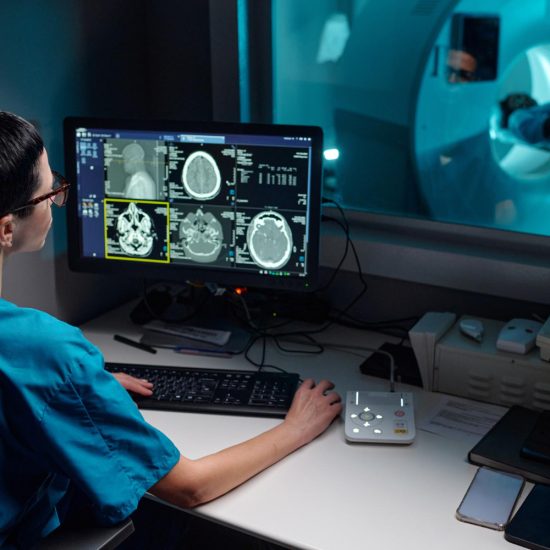
Artificial intelligence continues to reshape conversations across healthcare. Yet one health system CEO is pushing back against a growing misconception. AI will not replace radiologists. Instead, it will help address a serious and ongoing shortage of radiology professionals.
What the CEO Actually Said
David Lubarsky, president and CEO of Westchester Medical Center Health Network in Valhalla, N.Y., recently spoke at a forum. The topic focused on how safety-net health systems can manage the radiologist shortage alongside rising cost pressures.
Following the event, several headlines suggested that health system CEOs support replacing radiologists with AI. Dr. Lubarsky quickly clarified that those reports got it wrong.
“What was actually said is that in low-risk patients who have an essentially negative scan, AI can read that correctly 99.97% of the time, as good as a radiologist,” he explained during an April interview at Becker’s 16th Annual Meeting in Chicago.
Moreover, the point was not to eliminate radiologists. The point was to redirect their limited time and expertise toward patients who truly need it.
AI as a Support Tool, Not a Replacement
Redirecting Radiologist Expertise
Dr. Lubarsky’s position is straightforward. AI should handle routine, low-risk scans. Radiologists, in turn, should focus their skills on complex, high-risk cases. This approach makes practical sense in a field already stretched thin.
When AI handles simple pattern recognition on negative scans, radiologists gain more time. That time goes toward cases where human judgment is critical. Furthermore, this shift does not reduce the need for radiologists. It actually highlights just how essential they are.
AI Cannot Process Human Context
Fears of widespread AI job displacement exist across many industries. Healthcare is no exception. However, Dr. Lubarsky believes technology will only augment clinical work. It will never replace the human element that defines good patient care.
“You can never substitute the patient-physician or patient-nurse partnerships in their care, the human compassion and concern, or frankly, an understanding of an individual’s unique circumstances,” he said. “These qualities can only be processed by human beings with emotional capacity.”
This perspective reflects a broader truth in healthcare. Technology can identify patterns in data. However, it cannot replicate empathy, context, or the deeply personal nature of the doctor-patient relationship.
The Human Touch in Medicine Remains Irreplaceable
AI excels at tasks involving defined inputs and measurable outputs. It struggles, however, with the nuanced, emotionally intelligent work that caregivers perform every day.
Consequently, health systems must treat AI as a tool within a human-led system. Not as a substitute for clinical professionals. Radiologists bring years of specialized training, ethical judgment, and an understanding of patient history. These qualities do not transfer to a machine, no matter how accurate its scan reading becomes.
The Financial Case for AI in Radiology
Reducing Costs Without Reducing Quality
Beyond clinical reasons, Dr. Lubarsky also made an economic argument. AI-assisted radiology makes financial sense in specific, well-defined circumstances.
“We always talk about the cost of care exploding,” he noted. “It is very expensive to hire a radiologist to do something that, in a specific set of circumstances — low-risk patient, negative scan — can be done just as well with a computer evaluation as a human evaluation.”
Therefore, using AI for routine reads can reduce operational costs. At the same time, it preserves high-value radiologist time for complex work. This balance improves both financial performance and patient outcomes.
Smart Allocation of Specialized Labor
Health systems face ongoing pressure to control costs. Simultaneously, they must maintain quality care. AI offers a practical middle ground. It handles predictable, repeatable tasks efficiently. Meanwhile, radiologists concentrate on scans where their expertise is truly invaluable.
As Dr. Lubarsky put it: “Why pay a ton of money for that when you can pay the money to get them to really look at the scans where their expertise is invaluable and irreplaceable?”
Radiologist Shortage Drives the Conversation
The entire discussion stems from a real and pressing problem. There are simply not enough radiologists to meet current demand. Safety-net health systems feel this gap most acutely.
Westchester Medical Center Health Network is no exception. Dr. Lubarsky confirmed that his organization turns away imaging exams. Not by choice, but due to a lack of staff to perform the reads.
“We are not getting rid of a single radiologist, just for the record,” he stated. “But, boy, do we turn away a bunch of exams, frankly, to our competitors. We do not have enough people to do all the work.”
This admission reveals the real driver behind the AI conversation in radiology. It is not about cutting costs by eliminating professionals. It is about stretching limited resources further without compromising care quality.
Safety-Net Systems Face Greater Pressure
Safety-net hospitals serve vulnerable populations. They operate on tighter margins. They also face greater difficulty recruiting and retaining specialists like radiologists. For these organizations, AI tools can play a meaningful role. They help maintain service capacity when recruitment alone cannot solve the problem.
Key Takeaway
AI is neither a threat to radiologists nor a cure-all for healthcare’s workforce challenges. Instead, it is a targeted tool. When applied correctly, it handles simple, routine tasks. That frees radiologists to focus where their skills matter most.
Dr. Lubarsky’s message is clear. AI supports human expertise. It does not replace it. Health systems that embrace this distinction will be better positioned to serve patients, manage costs, and navigate the growing demands of modern healthcare.