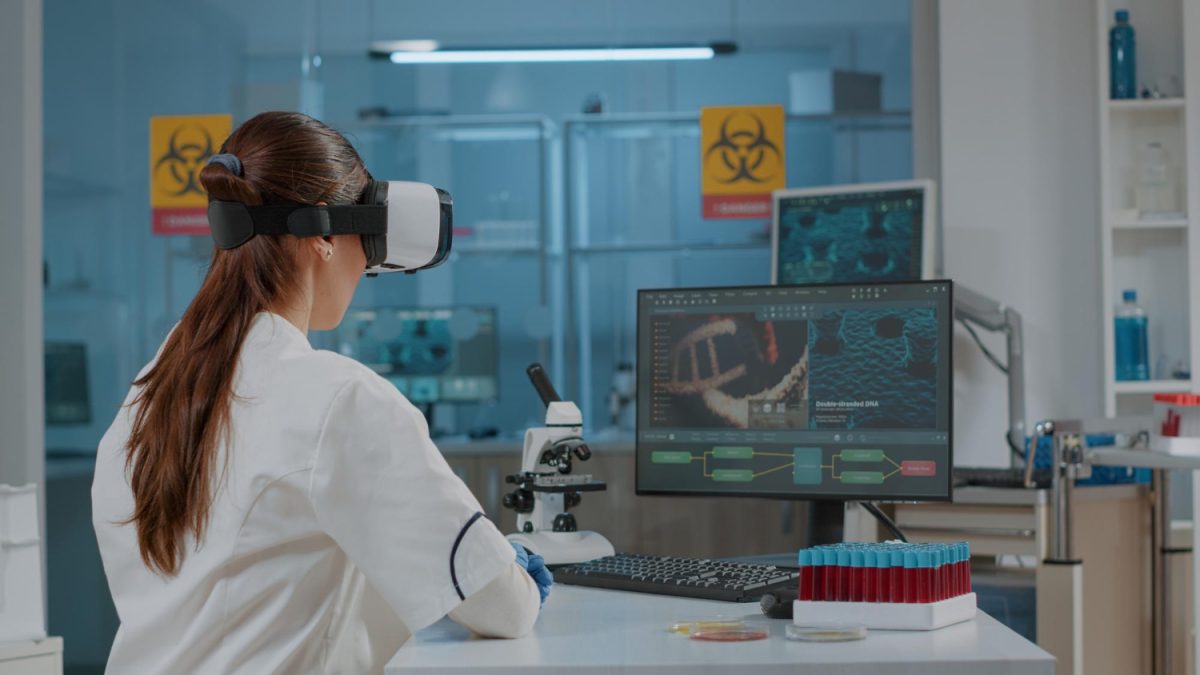
What Is the IGoR Program?
The U.S. Department of Health and Human Services (HHS) is making a bold bet on artificial intelligence to overhaul biomedical research. On May 5, 2026, the Advanced Research Projects Agency for Health (ARPA-H) — a unit of HHS — officially launched the Intelligent Generator of Research (IGoR) program. The five-year initiative aims to build a next-generation, AI-powered research ecosystem. Its core goal: deliver validated medical breakthroughs at least ten times faster than conventional research methods.
Crucially, IGoR is not simply a large language model wrapped around biomedical data. ARPA-H makes this distinction explicitly. Instead, IGoR aims to be a fully integrated, autonomous research platform — one that spans hypothesis generation, experimentation, and continuous model refinement.
The Problem With Traditional Biomedical Research
A System Stuck in the Past
Biomedical research has long operated on a centuries-old model. Individual labs design experiments, publish findings, and wait for others to build on their work. This process is slow, fragmented, and expensive. Moreover, it suffers from a major structural flaw: the reproducibility crisis.
Research shows that more than 70% of scientists cannot reproduce another researcher’s experiments. Furthermore, up to 89% of preclinical research cannot be fully reproduced. These figures represent years of wasted funding, delayed treatments, and patients who never benefit from discoveries already made.
The Cross-Lab Coordination Problem
Beyond reproducibility, cross-lab collaboration is another bottleneck. Today, transferring an experiment from one laboratory to another requires extensive negotiation, protocol adaptation, and data reformatting. Each step introduces delay and error. IGoR directly targets this friction point.
How AI Powers the IGoR Ecosystem
A Closed-Loop Research Model
At its heart, IGoR creates what ARPA-H calls a “closed-loop” AI research ecosystem. This means the system continuously cycles through three core phases:
- Hypothesis generation — AI identifies gaps in existing knowledge and proposes targeted experiments.
- Automated experimentation — Validated labs execute standardized protocols across distributed sites.
- Model refinement — Results feed back into disease models, sharpening future predictions.
This cycle allows researchers to generate validated knowledge far more rapidly than any human-led process could achieve alone. Consequently, complex and chronic diseases — conditions that have historically resisted fast breakthroughs — become tractable targets.
From Years to Months
ARPA-H frames IGoR as a direct answer to a systemic failure. Rather than waiting for knowledge to “trickle through the literature,” IGoR compresses research timelines dramatically. The agency’s stated ambition is to speed up biomedical discovery ten-fold — turning what once took decades into a matter of years, or even months.
Key Components of the IGoR Platform
Four Integrated Capabilities
IGoR combines four tightly interlocking elements:
1. Mechanistic Disease Models These models encode causal biological relationships across multiple scales — from molecular interactions to organ-level effects. They serve as the scientific foundation for every experiment IGoR generates.
2. AI Orchestration Layer An intelligent orchestration system scans the disease models, identifies knowledge gaps, and designs targeted experiments to fill them. This replaces ad hoc researcher intuition with systematic, data-driven prioritization.
3. Standardized Protocol Architecture IGoR standardizes experimental protocols so that transferring a study from one lab to another becomes “as straightforward as sending a data file.” This directly addresses both the reproducibility crisis and cross-lab coordination barriers.
4. Distributed Lab Marketplace A vetted network of laboratories can receive experiment requests, execute them under standardized conditions, and return high-quality data back into the system. This scales research capacity without requiring any single lab to bear the full burden.
What Leaders Are Saying
HHS Secretary Robert F. Kennedy Jr. connected the IGoR launch to broader national health goals. ARPA-H Director Alicia Jackson, Ph.D. offered perhaps the most direct framing of the program’s urgency: families, she said, should not have to wait for breakthroughs while researchers repeat familiar experiments instead of the most informative ones. Americans, Jackson argued, deserve science that is transparent, efficient, replicable, and rigorous.
IGoR, Jackson added, will modernize how evidence is generated, shared, and validated — not just within ARPA-H’s portfolio, but across the wider research enterprise.
Broader Impact on U.S. Healthcare
Addressing Chronic and Complex Diseases
IGoR specifically targets research areas considered too expensive or complex for conventional methods. Chronic conditions like Alzheimer’s, diabetes, and cancer — diseases that impose enormous burdens on patients and the U.S. health system — stand to benefit most directly.
Reinforcing U.S. Research Leadership
Beyond treatment outcomes, ARPA-H frames IGoR as a tool for reinforcing American leadership in biomedical discovery. By building a scalable, AI-powered research infrastructure, the U.S. aims to maintain its competitive edge in global health innovation.
Expanding Partnerships
IGoR aligns with Jackson’s broader agenda at ARPA-H, which includes expanding partnerships with researchers, startups, and technology companies. Since taking over as director in late 2025, Jackson has pushed initiatives spanning healthcare cybersecurity, distributed biomanufacturing, and advanced medical technologies.
What Comes Next
ARPA-H plans to engage with industry, academic researchers, and technology partners as IGoR moves from proposal to implementation. The five-year timeline gives the program room to iterate — but the ambition is clear from day one.
The IGoR grant program represents one of the most structurally ambitious shifts in U.S. federal research strategy in recent years. If it succeeds, the ripple effects could touch every corner of biomedicine — from drug development to clinical trial design to FDA regulatory review.