Introduction: India’s Healthcare Innovation Journey
India, a nation that has contributed enduring principles of wellness to the world, is now positioned to influence the next chapter of healthcare innovation. Our clinical landscape is defined by its diversity in disease patterns, lifestyle behaviours, and access to care. Moreover, as healthcare delivery modernises, India’s healthcare sector is moving from siloed IT systems to connected, intelligence-driven care ecosystems. Consequently, hospitals, devices, clinicians, and patients now interact through continuous data flows, marking a deliberate transition toward insight-led healthcare delivery.
Understanding Digital Twin Technology in Healthcare
Digital twin technology represents a paradigm shift in how healthcare organizations operate and deliver care. Furthermore, this revolutionary approach creates virtual replicas of physical healthcare environments that update continuously with real-world data.
Digital Twins: Creating Hospital Performance Models
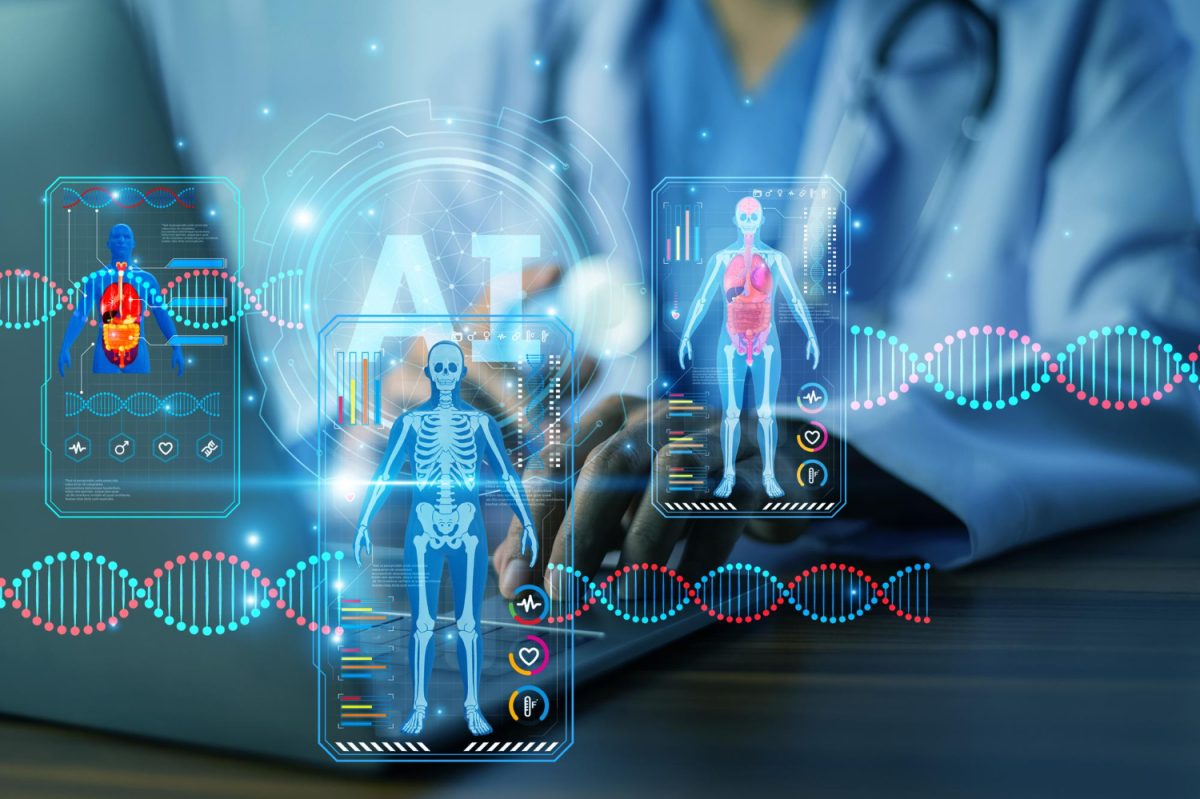
A digital twin is a continuously updated, data-driven virtual replica of a physical healthcare environment. Specifically, it synthesises information from patient monitors, clinical workflows, staff movement, equipment utilisation, maintenance records, medication cycles, and bed occupancy. Therefore, it creates a live operational model of an ICU or operating room that mirrors real-world conditions with near-real-time fidelity.
Predictive Intelligence Capabilities
What makes the digital twin transformative is its ability to deliver predictive situational intelligence. Rather than reacting to issues as they surface, care teams can identify emerging risks such as early signs of patient deterioration, deviations in equipment behaviour, rising workload pressures, or workflow congestion. Ultimately, this foresight enhances operational decision-making, enabling teams to plan with clarity and respond with precision.
Impact on High-Risk Hospital Wards
In India, where the doctor-to-patient ratio places significant pressure on clinical teams, hospitals consistently work to enhance efficiency, resilience, and reliability, especially in high-risk environments.
Challenges in Critical Care Units
High-risk hospital wards, including ICUs, operating theatres, and emergency units, are settings where precision, coordination, and real-time decision-making are non-negotiable. However, these environments continue to face persistent challenges: fluctuating patient acuity, equipment readiness issues, unpredictable workloads, staff fatigue, and tight response timelines. When left unmanaged, these variables can rapidly create operational vulnerabilities that affect care quality and exert additional strain on already stretched teams.
Unified Operational Intelligence
Addressing such complexity requires more than incremental fixes. Instead, it calls for a unified operational intelligence layer that brings together data from diverse clinical systems, interprets patterns, and supports timely action. This is where digital twin technology is beginning to demonstrate its real impact by creating a continuously updated virtual replica of the care environment.
Addressing India’s Healthcare Challenges
India faces systemic healthcare challenges, including a shortage of specialists and uneven access in rural regions. In this context, digital twins enable risk-free surgical pre-planning by allowing surgeons to train and simulate complex procedures on virtual replicas. As a result, this helps reduce clinical risk and improve patient outcomes, especially in high-stakes, resource-constrained settings.
Personalised Disease Care and Patient Engagement
Chronic conditions such as diabetes, cardiovascular disease, and maternal health represent a substantial share of India’s healthcare burden. With the shift toward intelligent, data-driven care delivery, digital twin technology is emerging as a powerful tool to support personalised disease management at scale.
Integration of Patient Data
By integrating inputs such as clinical data, diagnostic readings, lifestyle indicators, and medication patterns, digital twins can model disease progression and recommend more tailored interventions than traditional, guideline-only approaches. Subsequently, this enables healthcare providers to deliver truly personalized care pathways.
Precision Medicine and Genetic Diversity
India’s population has one of the most complex genetic landscapes in the world, making it an ideal testing ground for precision therapeutics. This diversity also means that drugs developed abroad often show reduced efficacy among Indian patients. Importantly, digital twins can model drug responses tailored to specific Indian genetic profiles.
Market Growth Projections
Reflecting this shift, India’s personalised medicine market is projected to reach US$38,773.0 million by 2033, growing at a CAGR of 13% from 2025 to 2033. This remarkable growth demonstrates the increasing adoption of precision healthcare solutions.
Multi-Speciality Care Coordination
This level of personalisation is particularly valuable in multi-speciality care, such as complex cardiac or oncology cases, where different specialists propose varying treatment paths. In such scenarios, digital twins serve as a common intelligence layer that consolidates clinical evidence, provides likely outcomes, and helps teams align on a unified, data-backed plan.
Global Momentum and India’s Opportunity
Across the world, healthcare systems are embracing digital twin technology to strengthen continuity of care, improve operational predictability, and modernise clinical workflows. Countries such as the US, UK, Germany, Singapore, Japan, and the Nordics are deploying digital twins across hospital operations, ICU optimisation, medical device lifecycle management, predictive maintenance, capacity planning, and digital validation of care pathways.
The Road Ahead for Digital Twin Adoption
This global acceleration presents a significant opportunity for India. With expanding digital public infrastructure, deep engineering talent, and a fast-growing health-tech ecosystem, India is well-positioned to adopt digital twins at scale. Their maturity will hinge on real-time data integration, AI-driven insights, cyber-secure and scalable infrastructure, and stronger collaboration—shifting healthcare from reactive operations to predictable, resilient, intelligence-driven models of care.