The hospital-at-home model has moved well beyond its pilot phase. Across the United States, leading health systems are scaling acute care at home at an impressive pace. Moreover, they are pairing these programs with advanced technology to make home-based care safer, smarter, and more sustainable. Furthermore, this convergence of clinical innovation and digital tools marks the beginning of a new era for care delivery.
Penn Medicine Leads With the PATH Program
Penn Medicine’s Hospital-at-Home Initiative Reshapes Acute Care
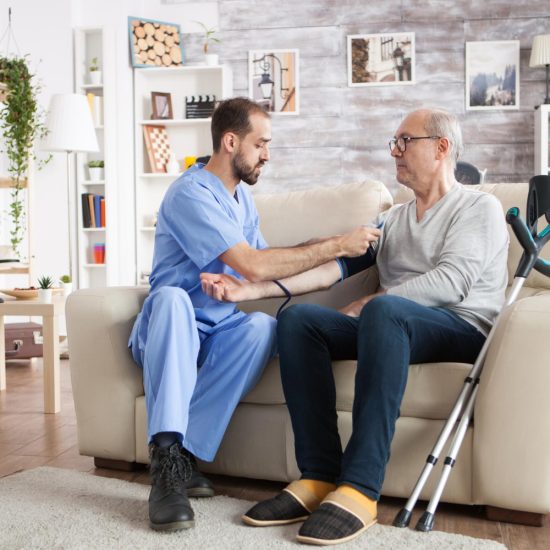
Philadelphia-based Penn Medicine recently launched the Penn Acute Care at Home (PATH) program as a core part of its enterprisewide care transformation strategy. The program transitions eligible acute care patients — including those with conditions such as pneumonia — from crowded hospital floors to the comfort of their own homes. Additionally, it draws on a fully integrated electronic health record shared across the entire health system, enabling seamless coordination between hospital-based teams and home care providers.
Dr. Raina Merchant, vice president and chief transformation officer at the Perelman School of Medicine, explained that the program’s development was driven by three forces: clinical evidence, operational insight, and patient preference. “Our decision was really informed by a combination of clinical evidence, operational insights and really patient preference,” she said. After a successful nine-month pilot, Penn Medicine began preparing for a specialized expansion model slated to launch in early 2026.
Why PATH Matters for Hospital Congestion
Emergency departments across the country are under severe strain. Hospitals regularly operate at or near capacity, leaving patients waiting hours for inpatient beds. The PATH program directly addresses this problem. It routes appropriate patients to home settings, thereby freeing up hospital beds for the most critical cases. Consequently, patient satisfaction improves, and clinicians can focus attention where it is needed most.
How Ambient AI Documentation Supports Home Care
AI Tools Cut Clinician Charting Time Significantly
Alongside the PATH program, Penn Medicine is also deploying ambient AI documentation tools to reduce the administrative burden on clinicians. These tools use artificial intelligence to listen to provider-patient conversations and automatically generate clinical notes in real time within the electronic health record. As a result, physicians spend less time typing and more time focusing on patients.
A Penn Medicine study found that clinicians using ambient AI tools experienced a 20 percent drop in EHR interaction time during and after patient visits. Furthermore, after-hours documentation — often called “pajama time” — fell by 30 percent. Clinicians embraced the technology quickly. Dr. Merchant noted that what started as a top-down deployment soon became a clinician-driven movement. “It isn’t a technology we’ve had to push,” she said. “Clinicians are asking for it, recommending it to peers, and seeing it as a meaningful solution to a long-standing pain point.”
Ambient AI Adoption Is Accelerating Industry-Wide
Penn Medicine is not alone in this shift. Nationally, an industry survey found that 71 percent of physician practice leaders now use AI for patient visits. Projections also suggest that 60 percent of all healthcare providers may adopt AI-driven documentation tools by the end of 2026. This rapid adoption reflects a broader recognition that clinical documentation has long been a leading driver of physician burnout — and that ambient AI offers a practical, scalable solution.
Health Systems Scale Nationwide
Major Programs Report Dramatic Admission Growth
Beyond Penn Medicine, health systems across the country are reporting significant growth in hospital-at-home volumes. At Pittsburgh-based Allegheny Health Network, admissions jumped from seven to eight per month in January 2024 to approximately 40 per month by mid-2025 — a more than fivefold increase. Similarly, Mass General Brigham in Somerville, Massachusetts, which operates one of the largest acute care-at-home programs in the country, has shifted from building capacity to optimizing it. The organization now describes itself as being in “thrive-and-growth mode.”
Cleveland Clinic launched its hospital-at-home program in Florida in April 2023 and treated roughly 1,000 patients in its first year. Patient experience scores from the program rank among the highest across the entire Cleveland Clinic network. The program’s leader, Dr. Richard Rothman, set a long-term goal: to treat 10 percent of all inpatient admissions at home.
Mayo Clinic and University of Chicago Medicine Expand Pathways
Mayo Clinic developed its hospital-at-home model in partnership with Kaiser Permanente. Today, 21 health systems deploy that model, including both academic institutions and regional hospitals. Mayo’s oncology department has also used the home setting to run a distributed clinical trial, recruiting patients from both an academic institution and a community hospital simultaneously. As COO Maneesh Goyal noted, the team stood up the new care model in three to four months — a timeline that would have taken years under traditional approaches.
Meanwhile, at the University of Chicago Medicine, leaders are working closely with commercial payers to expand insurance coverage and broaden patient eligibility. Their goal is to cement hospital-at-home as the foundation of a broader care-at-home ecosystem.
Staffing Models Evolve for Sustainability
Health Systems Rethink Workforce for Home-Based Care
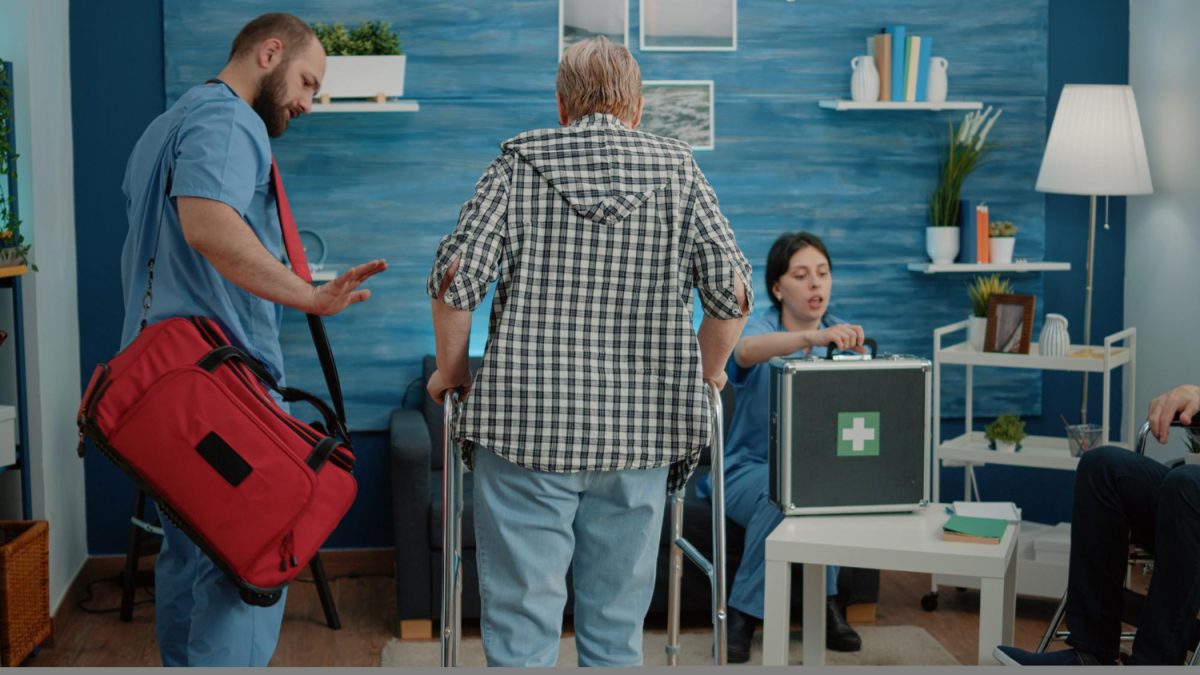
As volumes grow, staffing models must keep pace. Many programs initially relied on in-person care teams visiting patients at home. However, leading health systems are now shifting toward hybrid or virtual-first approaches that reduce costs without sacrificing care quality.
ChristianaCare in Delaware, for example, built a 24/7 command center that functions as the backbone of its home care delivery. The system also created a dedicated nursing role to guide patients into the program and co-developed a logistics platform for daily scheduling. “This role has proven essential for the ongoing growth of our program, because it’s such a new concept for patients and even many physicians,” said Dr. Sarah Schenck, executive director for ChristianaCare’s Center for Virtual Health.
Analytics and Embedded Providers Drive Referrals
At Highmark Health, backend analytics flag appropriate patients for home care, while a dedicated staff member explains the program to each patient — an approach that has meaningfully improved acceptance rates. Allegheny Health Network found that embedding advanced practice providers inside hospitals and conducting direct outreach to emergency department staff and hospitalists was critical for generating referrals. “The hospitalists — the quarterbacks of inpatient care — were a key audience,” noted Dr. Vicenta Gaspar-Yoo.
Reimbursement, Payers, and the Road Ahead
CMS Waiver Extension Opens Strategic Planning Window
The CMS Acute Hospital Care at Home waiver has been a critical enabler of the hospital-at-home model since its launch in 2020. Its extension has shifted conversations at many health systems from contingency planning to long-term growth strategy. At Mass General Brigham, plans for 2026 include expanding clinical pathways in oncology and postoperative care, exploring behavioral health services, and piloting machine-learning tools to identify eligible patients earlier.
Daniel Metzger-Traber, vice president of strategic business operations for Healthcare at Home at Mass General Brigham, sees a second wave of innovation approaching. “When the first waiver launched, there was an explosion of innovation,” he said. “I believe we’re entering another phase of that innovation cycle.”
Commercial Payer Partnerships Are the Next Frontier
For hospital-at-home to reach its full potential, experts agree that commercial payer collaboration is essential. The model already delivers measurable value — reduced readmissions, lower post-acute utilization, and a total cost of care roughly one-third lower than traditional inpatient treatment. Accordingly, health systems are actively working with payers to expand coverage beyond Medicare and Medicare Advantage into broader commercial insurance plans.
Key Takeaways
Hospital-at-home has entered a decisive expansion phase. Clinical evidence supports the model. Patients prefer it. Technology — especially ambient AI documentation — is making it more efficient for clinicians to deliver care outside hospital walls. Furthermore, health systems that invested early in strong infrastructure are now positioned to grow profitably and sustainably. The next wave of innovation will focus on broader patient eligibility, smarter payer partnerships, and deeper technology integration. For health systems ready to move, the opportunity is significant.